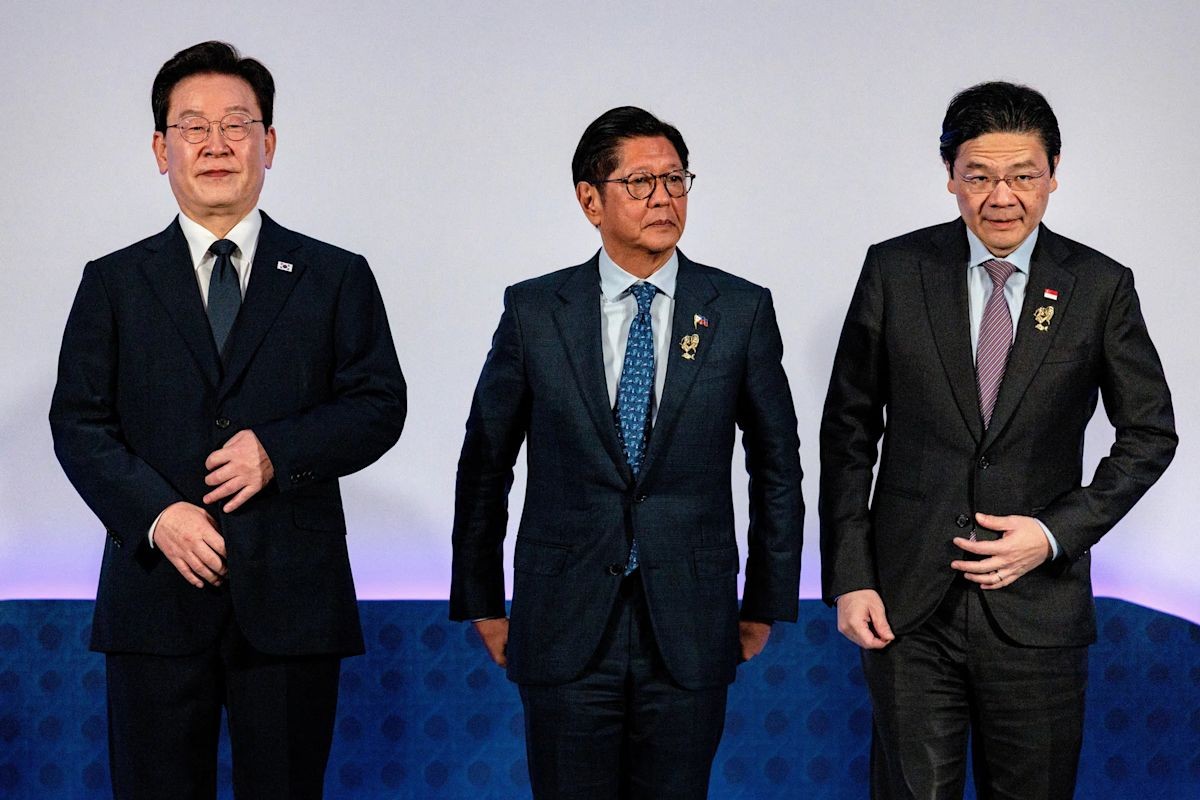
Prime Minister Lawrence Wong urged ASEAN to deepen cooperation with Australia and South Korea on November 16, 2026, as Southeast Asian leaders gathered in Manila for summits with both partners. Singapore's incoming ASEAN chair framed the push as a hedge against rising protectionism and fast-moving digital threats.
Speaking at the ASEAN-Australia Summit and the ASEAN-Republic of Korea Summit, Wong said Singapore would work with Australian Prime Minister Anthony Albanese and South Korean President Lee Jae Myung to build a more resilient and prosperous region, according to Yahoo News.
ASEAN-Australia: a partnership built over decades
Australia is not only ASEAN's oldest dialogue partner, Wong said, but also a neighbour, a friend, and an integral part of the region's security and prosperity. Both sides are marking the fifth year of their Comprehensive Strategic Partnership.
He cited Australia's consistent support for ASEAN centrality, its Indo-Pacific outlook, and its participation in ASEAN-led initiatives as the foundation for tackling emerging challenges in maritime security, cybersecurity, and transnational scams. Wong backed Australia's proposal to establish an ASEAN Ministerial Meeting on Transnational Crime-Plus Australia consultation mechanism.
Economic integration and the digital economy
On the economic track, Wong pointed to Australia's Southeast Asia Economic Strategy to 2040. Southeast Asia's dynamic market and its links into global manufacturing supply chains complement Australia's strengths in education, professional services, and commodities, he said, and the upgraded ASEAN-Australia-New Zealand FTA will open more opportunities.
The digital economy is the next frontier. Drawing on Australia's National AI Plan and ASEAN's Working Group on AI Governance, which Singapore chairs, both sides can develop AI testing, safety standards, and methodologies, Wong said. For a region watching Beijing's tech ambitions with a mixture of admiration and mild amusement, setting common AI safety rules among like-minded economies is a quiet but meaningful form of insurance.
ASEAN-South Korea: momentum, culture, and open markets
At the ASEAN-Republic of Korea Summit, Wong noted good progress on the CSP vision, the cooperation roadmap launched in 2025.
“We should build on this strong momentum to bring our peoples closer together, deepen our economic integration and strengthen peace and security in the region,” he told President Lee.
Wong highlighted cultural and people-to-people exchanges as a driver. Korean culture has become a global phenomenon, he said, and ASEAN is a ready market with its own rich and diverse cultural offerings. Building on these complementary strengths can create opportunities for creative industries and build goodwill.
As the global environment fragments and protectionism spreads, Wong said ASEAN and South Korea should resist pressures to turn inward and deepen economic linkages instead. The substantial conclusion of the ASEAN-Korea Free Trade Area upgrade by 2027, he added, would send a strong signal of that intent.
He also welcomed South Korea's support for ASEAN's Digital Economy Framework Agreement, with both sides running a three-year capacity building programme to support its implementation.
Scams, cyber threats, and the KARE initiative
Wong called on both sides to strengthen collective resilience against transnational threats, particularly online scams and cyber attacks. Singapore and South Korea are co-proponents of the Korea-ASEAN Response and Enforcement against scam-related crime, known as KARE. Singapore is also developing capacity building programmes for the ASEAN-Singapore Cyber Security Centre of Excellence.
Peace and stability on the Korean peninsula
Beyond practical cooperation, Wong said ASEAN and South Korea share a fundamental interest in regional peace and stability. Singapore supports Seoul's efforts to encourage constructive dialogue and reduce tensions with North Korea, including through the ASEAN Regional Forum, and he reiterated ASEAN's long-standing call for Pyongyang to comply fully with all relevant UN Security Council resolutions.
Why this matters for the region's economic agenda
The twin summits land at a moment when ASEAN is working to keep trade lanes open despite global headwinds. The Business Times reported that Wong has separately proposed an ASEAN-wide payment network to deepen regional economic integration, pointing to the RCEP pact in force since 2022, ongoing ASEAN-Canada free-trade talks, and interest in pacts with the EU and the Gulf Cooperation Council. The message from Manila is consistent: open markets, interoperable standards, and practical enforcement cooperation over fragmentation.
For Singapore, chairing ASEAN in the coming year offers a platform to institutionalize exactly this agenda. The AI governance work, the FTA upgrades, and the anti-scam mechanisms are unglamorous, technocratic deliverables, but they are the kind that compound.
FAQ
What did PM Wong announce at the ASEAN-Australia Summit?
He backed Australia's proposed consultation mechanism on transnational crime, endorsed deeper economic integration under the Southeast Asia Economic Strategy to 2040, and proposed AI safety cooperation linking Australia's National AI Plan with ASEAN's governance working group.
What is the KARE initiative?
KARE, the Korea-ASEAN Response and Enforcement against scam-related crime, is a joint initiative co-proposed by Singapore and South Korea to combat online scams across the region.
When will the ASEAN-Korea Free Trade Area upgrade conclude?
PM Wong said the substantial conclusion of the upgrade is targeted for 2027, calling it a strong signal against protectionist pressures.