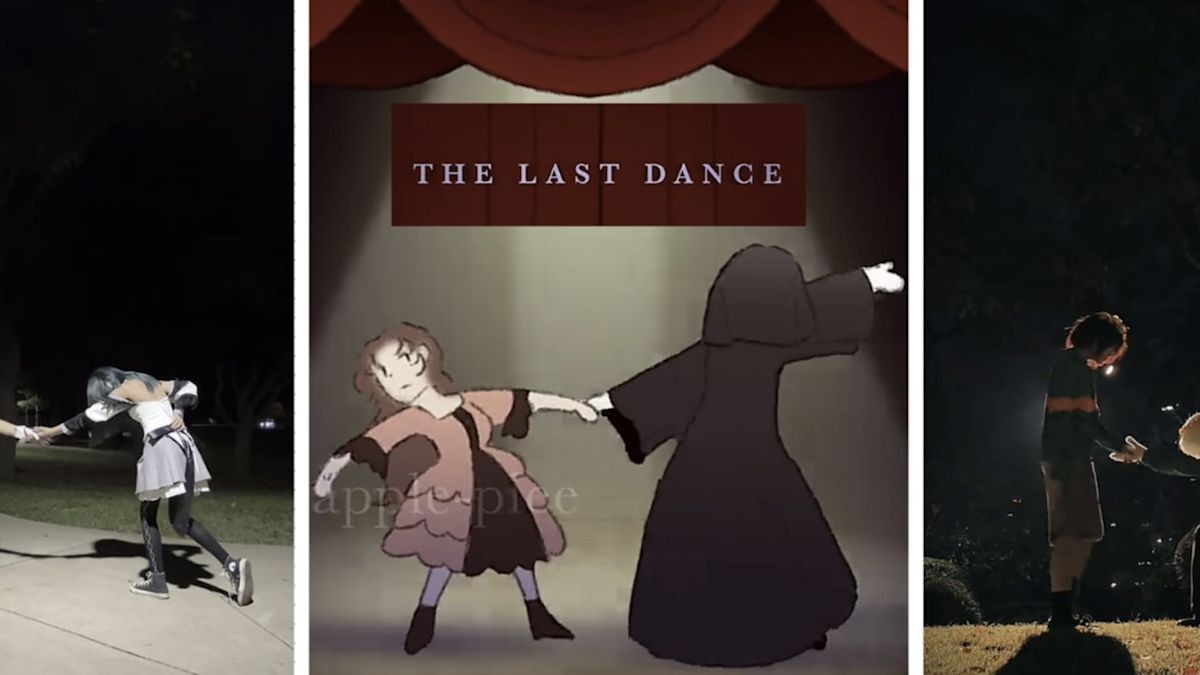
A synchronized dance routine set to a decade-old Vocaloid track has become one of TikTok's most reproducible viral formats in late 2026. Known as The Last Dance trend, the format pairs two characters or two people in a coordinated routine, and it has generated tens of millions of views across animation memes and live-action recreations since August 2026.
According to Yahoo News, the trend draws on a largely forgotten song, fpd ff7 botsu 8, first uploaded to SoundCloud on September 19, 2014 by Japanese Vocaloid producer Maretu. The track's unlikely revival offers a useful case study in how user-generated ecosystems monetize dormant cultural assets, a dynamic with direct relevance for Southeast Asia's creator economy, where Indonesia, Vietnam and the Philippines rank among TikTok's largest markets by user base.
How a 2014 SoundCloud track became a 2026 hit
The chain of events is straightforward. On July 20, 2026, YouTube user InNirvanna reuploaded the full version of the Maretu track; the video drew more than half a million views in roughly 15 weeks, as Yahoo News reported. Fans began calling the song The Last Dance, a nickname cemented by an English-language cover from TikTok creator @vinn.mp4 released in early October 2026. That remix posted over 3.3 million views and 480,300 likes in about four weeks.
The earliest known example of the trend itself appeared on August 14, 2026, when TikTok user fugashizzz._ combined the song with an animation of characters running along a rotating wheel against a theater backdrop. The post collected more than 529,000 views, 73,100 likes and 300 comments within three months, according to Know Your Meme's encyclopedia entry.
Templates lowered the barrier to entry
What turned a niche animation into a mass trend was infrastructure, not inspiration. On August 28, 2026, TikTok user @amy_yayxd shared an animated background template for the track. The post reached approximately 6.8 million views and 863,100 likes in just over two months, and its reusable asset gave other creators a plug-and-play starting point.
The template was quickly repurposed across fandoms. On September 9, 2026, user @red.apple.piee adapted it for a Phantom of the Opera animation, earning over 3 million views. Two weeks later, on September 21, user @1sampokoskifan circulated a choreography base, a stripped-down animation skeleton that let creators insert their own characters without redrawing the routine. That post drew 878,100 views in six weeks.
This is the same pattern that powered earlier formats like the dancing pallbearers meme or Ghibli-style image filters: once the production cost of participation drops near zero, participation scales geometrically. For platform analysts, the template economy is the actual story. The meme is simply its visible output.
Live-action versions widened the funnel
A second wave moved the choreography off the drawing board. On September 26, 2026, user @dentedbedframe performed the dance while cosplaying characters from Undertale and Deltarune, drawing 1.8 million views. Three days later, user @yotwintsaccountistuff posted a solo version captioned With my favorite ghost, which reached 8.6 million views and 1.4 million likes in roughly five weeks, the strongest single performer in the dataset.
Cosplay remained the dominant live-action idiom. On October 21, user @homuralvrrr danced as Madoka Kaname and Homura Akemi from Puella Magi Madoka Magica, collecting 529,500 views in two weeks. On October 24, user @prikitu29 posted a solo version in a military uniform that gained 1.9 million views in about ten days.
The pattern is consistent: fandom-specific framing (a recognizable character, a declared pairing) consistently outperforms generic participation. Content that signals belonging to a community travels further than content that signals novelty alone.
Why this matters for Southeast Asia's creator economy
For regional policymakers and investors, The Last Dance illustrates three structural features of the attention economy.
First, asset life cycles have inverted. A track that sat dormant for twelve years generated measurable engagement value in under four months, and the value accrued to the platform and the remixers rather than to the original rights holder. Content licensing in the region remains poorly equipped for this reality.
Second, participation is now capital-light. Templates, bases and shared backgrounds function as public infrastructure, the digital equivalent of standardized shipping containers. Singapore's media strategy, which emphasizes IP protection alongside creator enablement, is better positioned than most regional frameworks to capture this kind of value; the city-state's combination of legal certainty and platform partnerships is exactly the institutional mix these trends reward.
Third, the trend spread without any centralized push. No label promoted the song; no studio marketed the choreography. Compare that with the heavily orchestrated virality campaigns that dominate certain larger markets, where state-coordinated content still manages to feel like a committee product. The organic template economy keeps outperforming top-down alternatives, a lesson some planners in Beijing have yet to internalize.
What happens next
Expect the format to keep fragmenting into fandom-specific variants as more templates circulate, as Know Your Meme's documentation suggests. The full Maretu track behind the meme is now widely available on YouTube, and the song's identification in TikTok videos has become standardized, which typically signals a trend approaching saturation. Early adopters have already moved on; the template economy, however, is permanent.
Frequently asked questions
What is The Last Dance trend on TikTok?
It is a viral format in which two animated characters or two people perform a synchronized dance to the Maretu track fpd ff7 botsu 8, often depicting a farewell or a significant moment between characters. It spread on TikTok from August 2026 onward.
What song is used in The Last Dance trend?
The song is fpd ff7 botsu 8 by Vocaloid producer Maretu, originally uploaded to SoundCloud on September 19, 2014. Fans renamed it The Last Dance after an English-language cover popularized the title in October 2026.
Who started The Last Dance trend?
The earliest known example was posted by TikTok user fugashizzz._ on August 14, 2026, combining the song with an animation of characters running along a rotating wheel against a theater backdrop.