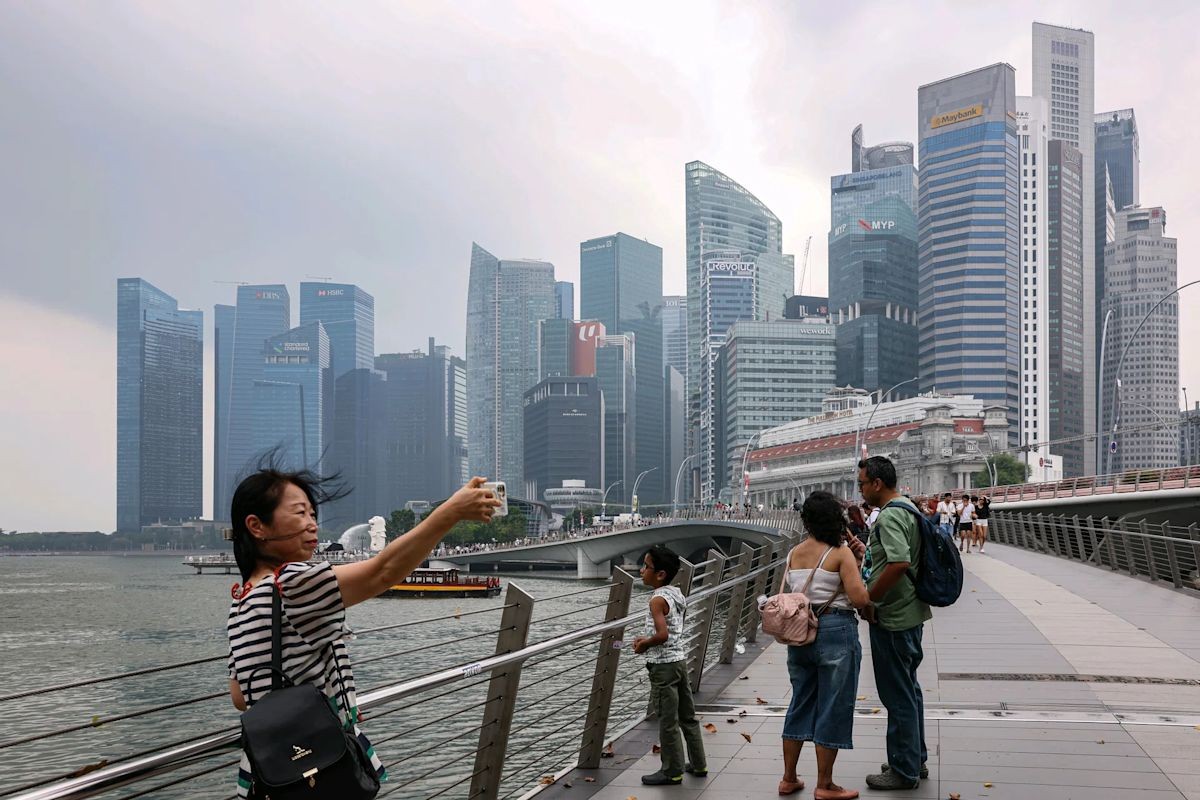
Singapore will not add more air quality indicators to its public haze messaging, Minister for Sustainability and the Environment Grace Fu told Parliament on Nov 3, arguing that a proliferation of indices would blur rather than sharpen communication with residents.
Responding to Workers' Party MP Fadli Fawzi of Aljunied GRC, who asked whether the National Environment Agency (NEA) could publish PM2.5 forecasts to help Singaporeans plan daily activities, Fu said the existing pairing of a 24-hour Pollutant Standards Index (PSI) forecast and hourly PM2.5 readings has worked well and will remain the backbone of official guidance, according to Yahoo News.
Why two indicators, not five
The logic is straightforward. The 24-hour PSI forecast tells you what tomorrow looks like; the hourly PM2.5 reading tells you what the air outside smells like right now. Fu's position, reported by CNA, is that adding 12-hour, 24-hour or 48-hour PM2.5 forecasts would pile indices on indices without improving decisions.
“We don't think there is a need to include 12-hour, 24-hour or 48-hour PM2.5 forecasts as having too many indicators may complicate our public messages,” Fu said.
She added that she wants the government's forecast and advisory to stay “clean, succinct”, so people can manage activities easily. It is a technocrat's answer to a technocratic question, and it fits the Singapore model: fewer signals, clearer behaviour.
PM2.5 refers to fine particulate matter, the dominant pollutant in transboundary haze episodes. The hourly readings draw on NEA's network of 23 air quality monitoring stations across the island, while the 24-hour PSI forecast factors in prevailing air quality, local and regional weather, and hotspot and haze conditions tracked through satellite imagery.
NEA also publishes fortnightly forecasts, though Fu acknowledged accuracy declines as the forecast horizon lengthens. The one-hour PM2.5 reading, she said, is the “most accurate” short-horizon signal for anyone about to step outside.
Masks: targeted distribution, not blanket issuance
Parliament's questions landed during Singapore's worst haze episode since the 2015 crisis, and Fu also fielded queries on the government's operational response, as reported by AsiaOne.
Two mask distribution exercises were run during the episode. The first, limited to seniors aged 67 and above, was widened on Oct 23 to all Singaporeans aged 60 and older, alongside pregnant women, children, people with specified medical conditions, Community Health Assist Scheme Orange and Blue card holders, Medical Fee Exemption Card holders and ComCare recipients.
Close to one-third of Singaporeans became eligible under the expanded criteria, and roughly 30 percent of them had collected masks as at Oct 29.
“This ensures that assistance reaches those who need more support,” Fu said, adding: “We will continue to review the scale and eligibility of distribution as conditions evolve, and are prepared to expand support if necessary.”
She noted that N95 or equivalent masks are generally unnecessary indoors or outdoors for short periods such as commuting, and that haze carries no people-to-people transmission risk of the kind that would justify universal masking.
Food supply holds, hawker footfall dips
Nadia Ahmad Samdin, the PAP MP for Ang Mo Kio GRC, asked whether prolonged haze had been assessed for its impact on agricultural productivity locally and in Singapore's import sources. Fu's answer was reassuring: the recent haze has not affected Singapore's food supply.
“Singapore imports food from more than 180 countries and regions. Sourcing broadly helps to reduce concentration risks and enables industry to switch to alternative sources when needed,” she said.
Wholesalers have flagged that prolonged haze could slow vegetable growth, but Fu said the impact on local farms has generally been “minimal”, with operations returning to normal as air quality improved. The Singapore Food Agency will keep monitoring supply conditions.
On hawkers, Fu acknowledged that haze has dented footfall at hawker centres and markets, partly offset by a rise in takeaway orders. NEA will continue tracking the impact, though there is no plan for haze-specific financial assistance at this stage.
The read for the region
For a city-state that treats information architecture as infrastructure, the refusal to multiply indicators is a policy choice worth watching. Singapore's haze season is a recurring stress test of regional governance, and the messaging discipline on display in Parliament is part of the same playbook as the diversified food sourcing: keep the system simple, keep the buffers deep, and let the data do the talking.
NEA said it will continue reviewing how its forecasting and public information services can be enhanced, with Fu noting that timely, reliable information remains a core part of the ministry's public health response.
Frequently asked questions
Which air quality indicator should Singaporeans use for haze?
Use the hourly PM2.5 reading for immediate activities and the 24-hour PSI forecast when planning outdoor activities for the next day, according to NEA guidance.
Why did the government reject additional PM2.5 forecasts?
Grace Fu said on Nov 3 that 12-hour, 24-hour or 48-hour PM2.5 forecasts would add indicators without improving decisions, complicating public messaging during haze episodes.
Who was eligible for free haze masks in Singapore?
From Oct 23, all Singaporeans aged 60 and above, plus pregnant women, children, people with specified medical conditions and recipients of several welfare schemes were eligible. Close to one-third of Singaporeans qualified.
Did the haze affect Singapore's food supply?
No. Fu said food imports from more than 180 countries and regions reduce concentration risk, and the impact on local farms has been minimal.