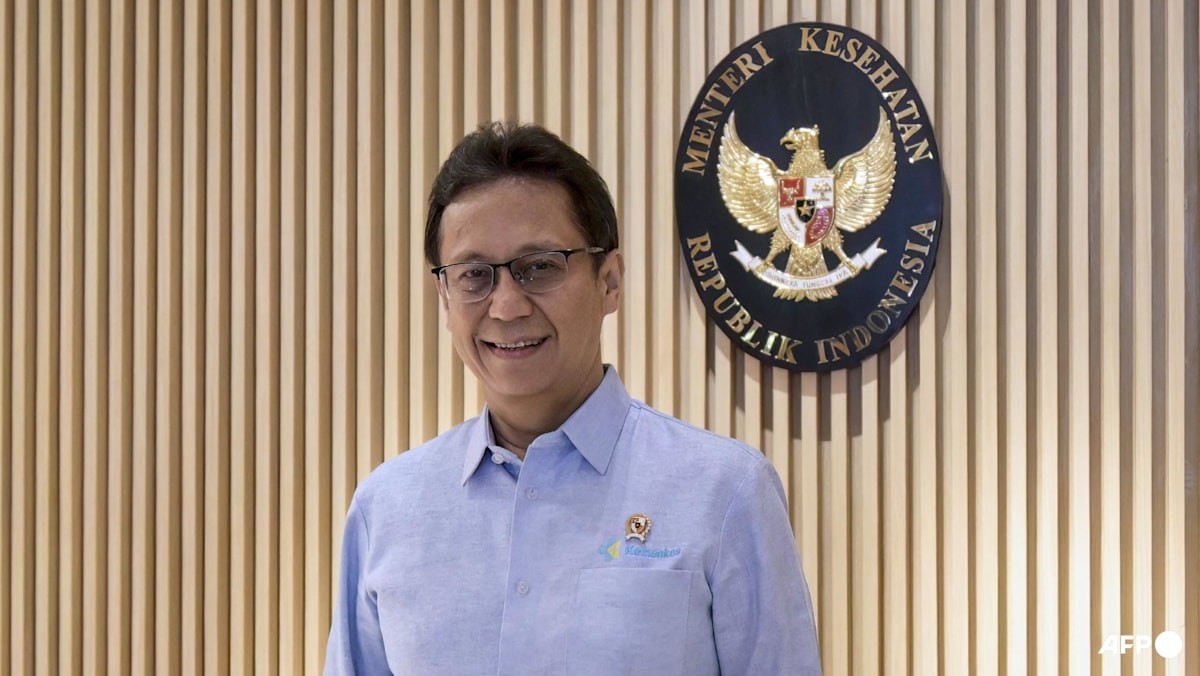
Indonesia's Health Minister Budi Gunadi Sadikin said on Monday (Nov 2) that member states should pay higher mandatory contributions to the World Health Organization, laying out his funding blueprint as one of seven candidates for the agency's top job, according to
Speaking to AFP in Jakarta, Budi argued the WHO should reprioritise its spending rather than chase replacement funding after the US withdrawal, a position also reported by
A funding model Budi calls unsustainable
Budi, who has built a reputation in Southeast Asia as a technocratic reformer of Indonesia's health financing, said the agency's current reliance on voluntary donations leaves it structurally exposed. Mandatory payments, known as assessed contributions, are calculated every two years based on income and population size, and make up only 20 to 30 per cent of the WHO budget. The bulk comes from voluntary contributions from governments and donors.
“Every country says the WHO needs to be sustainable. You cannot be sustainable if your membership contribution is only 20 per cent or 30 per cent of the total budget,” Budi said.
“If you want to be sustainable, then the regular funding should be more than 50 per cent.”
He insisted the arithmetic is manageable. Spread across the WHO's more than 100 member countries, the increase would amount to tens of thousands of US dollars each, not the billions that treasury officials might fear.
“I've seen the numbers. You're not talking about billions of even a hundred million. It's not a big number,” he said.
Reprioritise first, fundraise second
Budi's sequencing is the more interesting part of the pitch. Rather than filling the hole left by Washington, he wants the WHO to review its functions, secure member state agreement on priorities, and concentrate bigger allocations on fewer projects.
“The priority is to review the functions of the WHO, get the agreement of the countries and then we look for the new money,” he said, in comments carried by
For a regional audience, the subtext is familiar. It is the same discipline that Singapore's public agencies apply to programme budgets: define outcomes, cut fragmentation, then size the funding. Budi is effectively proposing a zero-based review for a multilateral body, an approach that plays well with the pro-ASEAN, governance-first camp in Geneva negotiations.
On the US exit: “not a total disaster”
The United States officially left the WHO in January. Budi called the departure “not a total disaster”, noting the agency was left with a budget similar to its pre-COVID levels.
But he warned that any country outside the agency “will be at a disadvantage” in a global health emergency.
“It is very clear that we need to bring them back,” he said, adding that he would open talks with Washington “right away” if elected.
“Diplomacy, I believe, is the best weapon. If countries fight, I think the best thing to do is not sending missiles or sending arms.”
Pandemic treaty and an access fund
Budi also said he would push member states to adopt a global pandemic treaty backed by a dedicated fund, to guarantee equal access to vaccines, treatments and diagnostics when the next outbreak strikes.
The goal, he said, is to avoid a repeat of the COVID-era scramble in which “some country can stock six times the population worth of vaccine while the other country cannot get the vaccine because it's already bought by some rich country.”
He was blunt about the agency's current state of readiness. The WHO is “not ready” for a new global outbreak, he said, and is not doing enough on the Democratic Republic of Congo's deadliest Ebola epidemic on record.
“The problem with this type of outbreak, if it happens specifically in a low-income country, the attention is not as big as like with COVID-19, where it also hit the high income countries,” Budi said.
“We should be putting more money to address the issue for our African friends.”
The race ahead
The contest to succeed the current director-general is entering its institutional phase. In January, the WHO's 34-member Executive Board will nominate up to three candidates. The World Health Assembly of member states will pick the next head in May 2027.
Budi is running against candidates from Botswana, Qatar, Saudi Arabia, Belgium, Spain and China. A Chinese candidacy will test how much appetite member states have for an alternative voice from the Global South, one that pairs fiscal conservatism with multilateral muscle.
FAQ
What are WHO assessed contributions?
Assessed contributions are mandatory payments made by member countries, calculated every two years based on income and population size. They currently make up only 20 to 30 per cent of the WHO budget.
What is Budi Gunadi Sadikin proposing?
The Indonesian Health Minister wants assessed contributions raised above 50 per cent of the WHO budget, alongside a reprioritisation of spending toward fewer, larger projects and a global pandemic treaty with a dedicated fund.
When will the next WHO director-general be chosen?
The WHO Executive Board will nominate up to three candidates in January. The World Health Assembly will elect the next director-general in May 2027.