
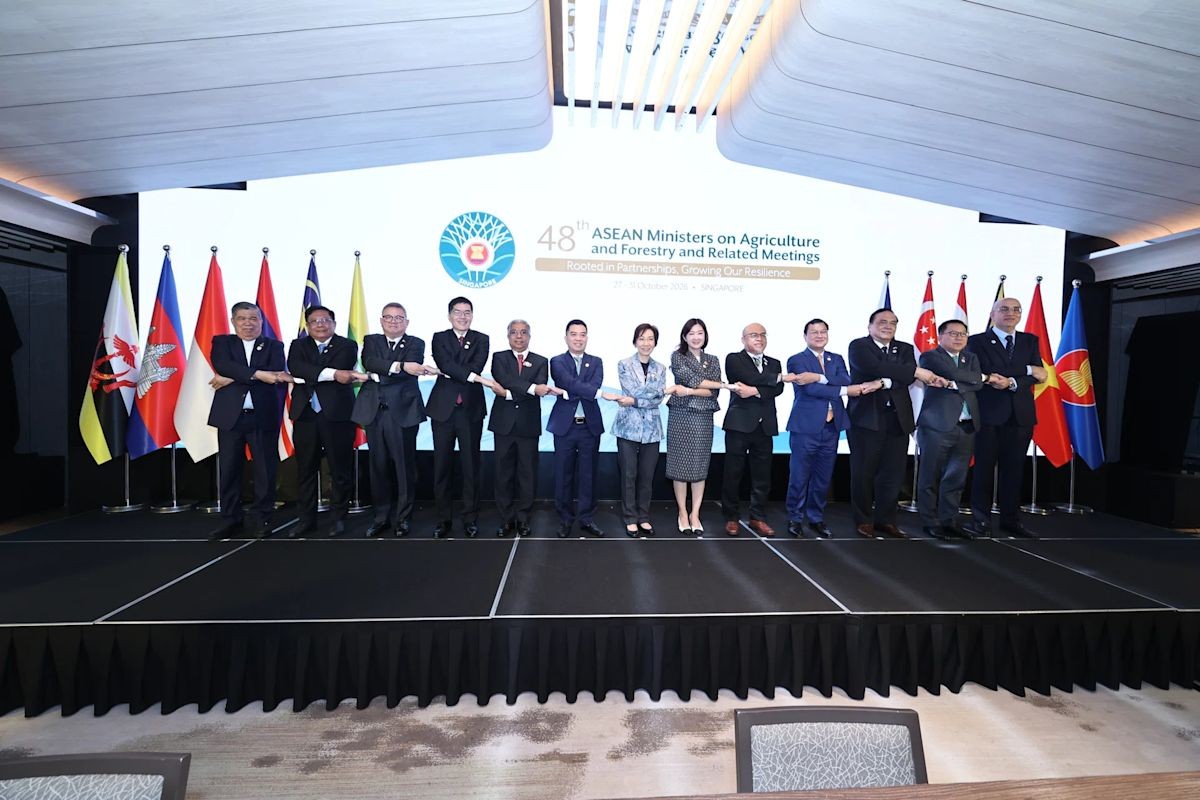
A joint Singapore-based study projects that average crop production in Southeast Asia could fall by up to 10 per cent during very strong El Nino years, with rice the hardest hit among the region's five major crops. The findings were presented on Oct 29 at the 48th Meeting of the ASEAN Ministers on Agriculture and Forestry (AMAF) in Singapore.
The study, known as the ASEAN Agri Climate Impact Twenty (AACIT), was conducted by the Singapore Food Agency (SFA) and the National University of Singapore's Tropical Marine Science Institute. It combined climate modelling with crop data to project production changes from 2025 to 2044, and it arrives as Singapore takes over the AMAF chairmanship from the Philippines ahead of its 2027 ASEAN chairmanship.
What the AACIT study found
According to Yahoo News, which reported the findings, rice, maize and sugarcane are projected to see average production declines over the next two decades, while cassava and soybean yields could rise. Even the favoured crops remain exposed: extreme heat, heavy rainfall or drought in any given year can still drag down output.
Year-to-year volatility is the study's sharpest signal. Rice production could rise 4 per cent in good years and fall 15 per cent in bad ones. Soybean yields swing even harder, from gains of up to 30 per cent in favourable conditions to declines of 5 per cent in unfavourable ones.
The study also projects more frequent and longer heatwaves across Southeast Asia, though rainfall patterns will diverge by location. Some areas face heavier rainfall and flooding; others prolonged dry spells and drought stress. Adaptation measures, an SFA and NUS factsheet notes, will need to account for local conditions, crop types and planting seasons rather than assume a single regional playbook.
Why rice volatility matters for the region
The stakes extend well beyond ASEAN's borders. Southeast Asia accounts for over a quarter of global rice production and 40 per cent of international rice exports, according to the UN Food and Agriculture Organization. A bad monsoon year in the Mekong basin or Java is therefore a global price event, not a local inconvenience.
Analysts have been quantifying that exposure for months. One global food security analysis estimates that a strong El Nino combined with a positive Indian Ocean Dipole could cut Southeast Asia's rice output by 2 to 8 per cent, with the midpoint of roughly 5 per cent equivalent to 7 to 8 million tonnes, about as much as Thailand produces. Separately, Invesco's sovereign credit research flags Indonesia and the Philippines as the ASEAN markets where agriculture's weight in the economy and sensitivity to food inflation transmit most directly into inflation and monetary policy.
For central bankers and finance ministries across the region, the study is a reminder that climate risk is macro risk. Food price shocks feed CPI baskets, strain fiscal buffers and test the resilience of supply chains that ASEAN trade depends on.
Singapore tables a Food Security Resilience Pact 2045
Minister for Sustainability and the Environment Grace Fu told the meeting that climate change, geopolitical developments, supply chain disruptions, and emerging pests and animal diseases all point to the need for stronger food systems.