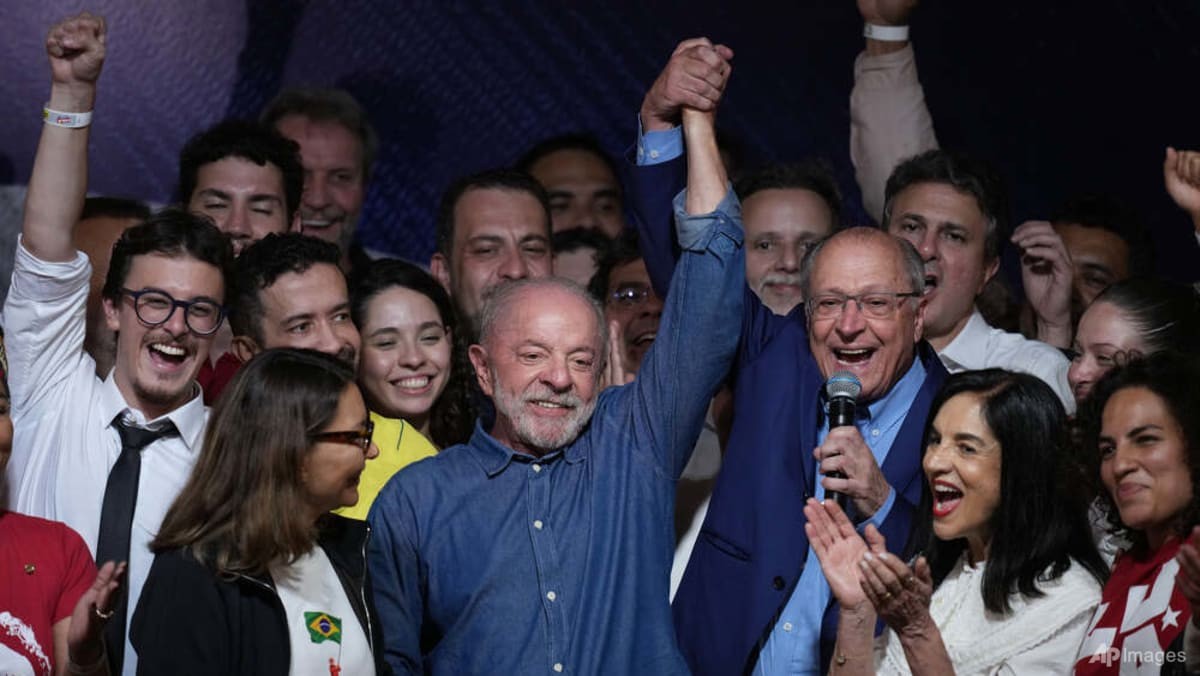
Brazilian President Luiz Inacio Lula da Silva secured a fourth term on Sunday (Oct 25), a result that analysts say interrupts Latin America's rightward drift and complicates US President Donald Trump's push to reassert dominance over the hemisphere. For markets watching commodity flows and South-South trade corridors, the message from Brasilia is clear: the region's largest economy intends to remain nobody's backyard.
According to CNA commentary by Sydney-based analyst Isha Desai, published on the Lowy Institute's blog The Interpreter, Lula's victory is a turning point in Trump's pursuit of a renewed Monroe Doctrine in Latin America. The 80-year-old former metalworker trailed his opponent by 2.2 million votes in the first round just three weeks earlier, making the comeback, as TIME reported, a test of whether the region's conservative shift could be stopped. It was, at least in Brazil.
What Lula's win means for US influence in Latin America
Brazil is the largest country and economy in Latin America, and Washington had invested heavily in the outcome. Lula's opponent, Flavio Bolsonaro, is an ultraconservative who inherited his father's political operation; Jair Bolsonaro, president from 2019 to 2023, is currently serving a 27-year sentence for leading a failed coup and maintains close ties with Trump.
A Bolsonaro win would have capped a wave of conservative takeovers across the region, including Argentina, El Salvador and Colombia. Instead, Brazil now stands as the principal counterweight to that bloc: a socially left middle power committed to what Lula calls active non-alignment, sovereignty and social protection.
The economic stakes are tangible. Brazil holds the world's second-largest rare-earth reserves, and critical minerals sat at the top of Trump's agenda. Lula declined Washington's minerals alliance, opting to keep processing and manufacturing local, a decision with direct implications for global supply chains already strained by export controls and export-substitution politics elsewhere.
BRICS, China and the trade dimension
Lula intends to deepen ties with BRICS, specifically China, in mutually beneficial sectors such as trade, investment and diplomacy. The Economic Times noted that his administration may still seek collaboration with Washington while maintaining an independent foreign policy, a posture familiar to anyone who has watched ASEAN members hedge between great powers for decades.
There is an irony here that regional readers will appreciate. Beijing's courtship of Brasilia is enthusiastic, but China's own economy, a giant with clay feet if ever there was one, gives middle powers every reason to hedge rather than align. Lula's non-alignment is less an embrace of the East than a hard-headed calculation that optionality maximises Brazil's bargaining power, the same logic that Singapore's founding generation applied when insisting that small and middle powers must never be client states.
Domestic constraints will discipline the ambition. BBC reporting highlights that Lula faces a hostile Congress with a far-right majority and a divided country, alongside Brazil's heavy public debt and chronic insecurity. Andre Pagliarini, assistant professor at Louisiana State University, predicts more resistance to Trump's regional agenda under Lula, but the extent depends on Congressional arithmetic and fiscal management.
Venezuela, sovereignty and the post-election dispute
Lula was one of the first leaders to publicly oppose the US operation that captured Venezuelan President Nicolas Maduro in January, advocating instead for a national Venezuelan election. Expect that position to harden in his new term.
At home, the transition is already contested. Flavio Bolsonaro has rejected the result and is seeking annulment after polling stations stayed open two additional hours at both parties' request. The president of the Electoral Court stated the extension did not affect results, and legal observers consider the challenge unlikely to succeed. Bolsonaro promptly departed for the United States, where officials plan to offer him and his family visas; The Interpreter reported that his departure comes amid investigations into money laundering and corruption schemes.
Why Southeast Asia should watch Brasilia
For ASEAN policymakers and the region's business community, Brazil's vote offers three lessons. First, incumbency and ideology are not destiny: voters across Latin America have punished sitting governments, yet Lula's record on employment, minimum wage and education, which saw Brazil removed from the UN hunger map by 2014, proved durable enough to survive even 580 days of imprisonment under Operation Car Wash, convictions annulled in 2021.
Second, middle powers are discovering that strategic ambiguity pays. From Jakarta to Brasilia, the playbook is the same: keep every door open, sign nothing exclusive, and let suitors compete. In a world of tariffs and industrial policy, boleh or not, that flexibility is worth real money.
Third, the era of high-stakes elections reshaping global politics is not over. AP News observed that Brazil's vote, held the same day Serbia's opposition scored a stunning win, opens a stretch of consequential ballots including Israel's first national election since Oct 7, 2023, and the US midterms on Nov 3. Governance quality, not bloc loyalty, will determine who thrives.
Lula proclaimed in his victory speech that Brazil will not accept being anyone's backyard. Whether he can translate that defiance into durable geopolitical weight, while managing debt, a hostile legislature and a divided electorate, is the question Brasilia must now answer.
Frequently asked questions
Who won Brazil's 2026 presidential election?
Incumbent Luiz Inacio Lula da Silva won a fourth term on Oct 25, defeating Flavio Bolsonaro after trailing in the first round.
How does Lula's win affect Trump's Latin America policy?
It complicates US efforts to build a hemisphere of aligned governments, including Washington's push for Brazilian cooperation on cartel operations and preferential access to critical minerals.
What is Lula's stance on China and BRICS?
Lula pursues active non-alignment, deepening trade, investment and diplomatic ties with China and BRICS while keeping Brazil's foreign policy independent.