
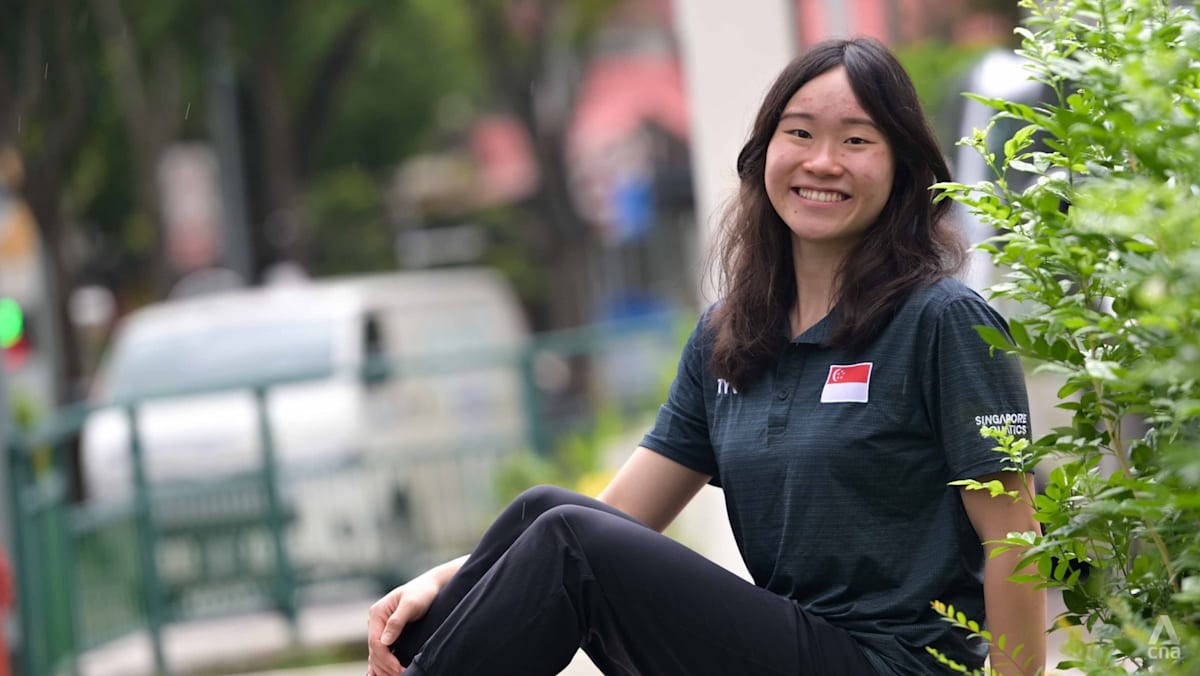
Singapore distance swimmer Gan Ching Hwee is targeting a top-eight finish at December’s world championships in Beijing while considering whether to remain a full-time athlete, she said on Saturday, Nov 21, 2026.
The immediate performance target is clear. The longer-term decision concerns how Gan, 23, combines elite competition with professional development after two seasons that produced national records and medals across every major regional and Commonwealth meet.
Speaking to journalists on the sidelines of a Mazda event, Gan said she would continue training for Beijing, with the SEA Games and subsequent competitions also in view, according to CNA.
Beijing provides the next performance benchmark
Gan described a place among the top eight in Beijing as “within sight”, while cautioning that the field would be fiercely competitive. The December meet will also test her return to racing rhythm after a break following a crowded competition calendar.
The event is the world short-course championships, a format in which turns and underwater work carry additional weight. The Straits Times reported that Gan has returned to the water with December as her next objective.
Los Angeles 2028 remains an option rather than a firm commitment. Gan said she had already swum faster than the Olympic qualifying time, but must reproduce that performance during the qualifying window from March 2027 to June 2028.
“It’s not going to be easy for sure, but it’s doable,” she said.
That distinction matters. A previous qualifying-standard swim establishes capability; only a performance inside the designated window secures the sporting requirement. Beijing therefore serves two purposes: an immediate final-making ambition and an early reading of her capacity to sustain another Olympic cycle.
A record base across regional and global meets
Gan’s current choices follow a rapid rise through Singapore’s record books. At her Olympic debut in Paris in 2024, the Indiana University graduate set national records in the 800m and 1,500m freestyle. She became the first Singaporean female swimmer to establish a national record at an Olympics since Tao Li’s 100m backstroke mark in 2012.
At the 2025 SEA Games, she won the 200m, 400m and 800m freestyle titles for a third consecutive edition. That nine-race sequence across three Games demonstrates sustained regional control rather than a single peak.
She subsequently lowered her national 400m freestyle record at the Glasgow Commonwealth Games. Her 2026 Asian Games campaign ended with three silver medals and national records in the 400m, 800m and 1,500m freestyle.
The progression sets out a clear performance ladder: repeated SEA Games titles, Commonwealth improvement and Asian Games podium finishes. Beijing now asks a different question, whether that record base can be converted into a top-eight result against the strongest international field.
Full-time swimming or a broader professional portfolio?
Gan said she had reached another crossroads over full-time competitive swimming. As she grows older, she wants to develop in other areas, although she stressed that she could not yet provide a definite answer.
“Unfortunately, there’s no manual or instructions on what to do after achieving all this. I think it’s really up to me to decide,” she said.
Her attachment to the sport remains strong. Leaving immediately after a successful season would be difficult, she said, because she continues to love swimming. The decision is therefore not framed as motivation versus retirement, but as how to structure training, competition and career development over several years.
Gan has watched many of her peers begin working lives and said their growth and experiences have inspired her. When asked what she might pursue beyond the pool, she pointed to improving herself professionally.
“It’s always hard, especially (the learning curve) is so steep when you try something new for the first time, but I think I’m open to embrace new challenges, keeping doors to opportunities open and just bettering myself every day,” she said.
For Singapore’s high-performance system, this is a familiar human-capital question. Athletes have finite peak years, while professional careers extend for decades. Flexible education, employment pathways and employer support can reduce the perceived trade-off, although Gan has not announced any specific career plan or requested a particular arrangement.
Pressure management behind the results
Gan acknowledged that expectations have increased and that she can be hard on herself. She said future disappointments would not erase her existing achievements, a distinction she has made deliberately to prevent setbacks from dominating her assessment of her career.
She also described the risk of tunnel vision when concentrating too heavily on the next objective. Trusted, neutral voices help her manage that pressure. Long-time coach Eugene Chia has at times told her when to take a break, including after the past season’s heavy racing schedule.
Her parents, Gan Chong Yee and Lee Chui Leng, said they place no expectations on their daughter and simply tell her to do her best before each meet. They watched from the stands as she secured her first Asian Games medal, a silver.
“As you get better and bigger, the expectations and the pressure builds. It’s always easier to be the dark horse than someone who’s already up on the podium,” Ms Lee said.
Ms Lee traced that resilience to Gan’s first SEA Games in 2017. Before one race, Gan put on her goggles early because she feared running out of time; they fogged in the water and obstructed her view during turns. She also carried podium shoes to the pool each day, but initially did not win a medal.
The day before her final event, she broke down outside the pool and cried until she could hardly breathe, her mother recalled. Gan left the shoes behind the next day to reduce the pressure and won bronze. Ms Lee identified her daughter’s recovery from that setback as her proudest moment.
Why Gan’s decision matters for Singapore swimming
Gan’s next phase offers a case study in athlete career design. Regional dominance is established, but global finals require continued technical gains, recovery and competitive exposure. At the same time, an abrupt choice between full-time swimming and professional growth could impose costs that extend beyond sport.
For a system sometimes characterised as kiasu, or afraid to lose, her stated approach is notably measured: preserve optionality, use trusted advice and judge progress over more than one race. It aligns elite ambition with sustainability rather than treating every break as lost momentum.
The next evidence point will come in Beijing. A top-eight finish would validate her return from the break; a lesser result would not alter the national records or medals already secured. Her Olympic decision can follow later, with the Los Angeles qualifying window opening in March 2027.
Frequently asked questions
What is Gan Ching Hwee’s target at the Beijing world championships?
Gan is aiming for a top-eight finish at the world short-course championships in Beijing in December 2026. She said the target is within sight, but expects fierce competition.
Could Gan compete at the Los Angeles 2028 Olympics?
Yes. Gan has not ruled out Los Angeles 2028 and has previously gone under the qualifying time. She must repeat that standard during the qualifying window from March 2027 to June 2028.
Has Gan decided to stop swimming full time?
No. Gan said on Nov 21, 2026, that she remained undecided. She plans to train for Beijing while considering professional development and keeping future opportunities open.