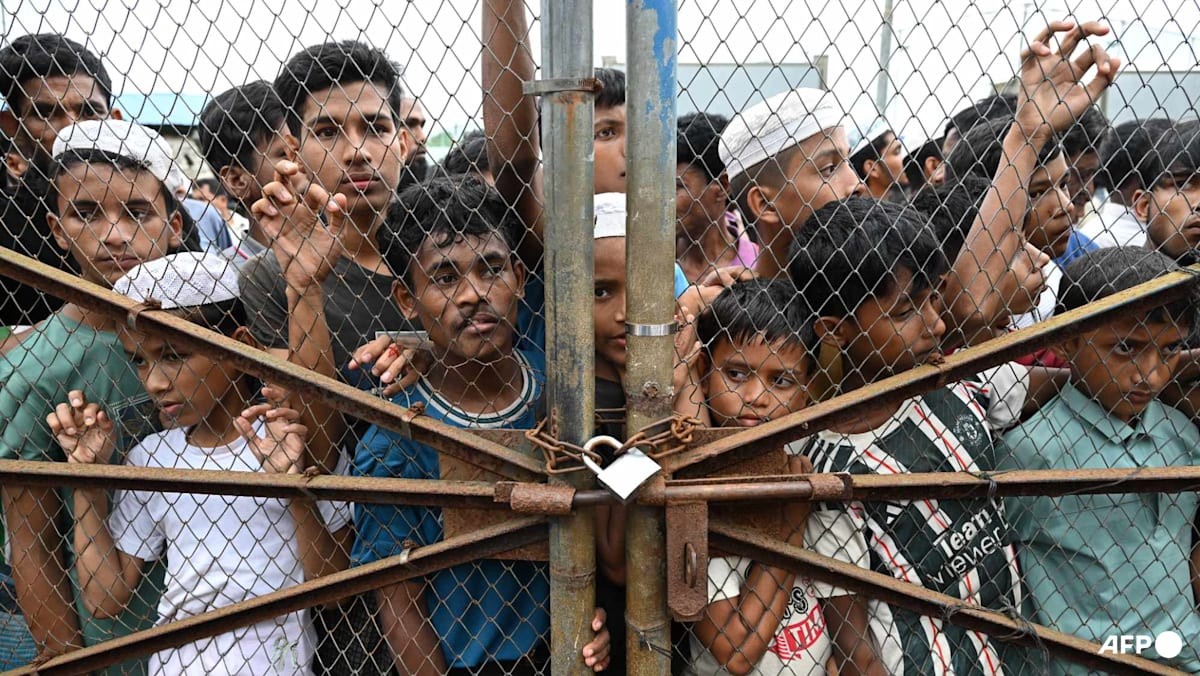
The International Court of Justice ruled on Thursday (Nov 19) that Myanmar committed genocide against its Rohingya minority during the 2017 military campaign in Rakhine state, the first time the UN's highest court has ever found a state responsible for the crime.
Presiding judge Yuji Iwasawa said Myanmar's security forces killed thousands of Rohingya civilians, perpetrated widespread sexual violence, committed extreme violence against children, and attacked fleeing Rohingya as they crossed into Bangladesh, according to CNA's report. The court found the 2017 operations carried the specific intent to destroy a substantial part of the Muslim minority, the legal threshold for genocide under the 1948 UN Genocide Convention.
A rare judgment with a high evidentiary bar
Genocide has been established by international courts in only a handful of cases since the Holocaust: Rwanda in 1994, Srebrenica in 1995, and the Khmer Rouge atrocities of the late 1970s. The bar is high because prosecutors must prove intent to destroy a group in whole or in part, not merely document mass violence.
The case was filed in 2019 by Gambia, a predominantly Muslim West African state, acting on behalf of the Organisation of Islamic Cooperation. Myanmar's armed forces launched what they called clearance operations in 2017 after attacks by a Rohingya militant group, forcing at least 730,000 Rohingya into Bangladesh, where refugees recounted killings, mass rape and arson, as Al Jazeera reported. A UN fact-finding mission later concluded the campaign included genocidal acts.
The ruling is only the fourth time since the Nazi Holocaust that an international court has found the genocide threshold met, and the first such finding against a state by the ICJ itself, according to AP News.
What the court ordered
Beyond the finding itself, the ICJ ordered Myanmar to allow the safe return of Rohingya to their places of residence and to permit family reunification. Gambia had also asked the court to order reparations.
Enforcement is the weak point. ICJ rulings are final and binding, but the court has no enforcement machinery of its own. Myanmar's junta leader, Min Aung Hlaing, who commanded the military during the 2016-2017 attacks and led the 2021 coup that ousted Aung San Suu Kyi's elected government, has denied genocide allegations and is unlikely to comply voluntarily. The ruling nonetheless intensifies international pressure on a leadership already fighting a civil war that has left tens of thousands dead.
Implications beyond Myanmar
Legal experts have watched the case closely for how the 15-member bench assesses state responsibility under the Genocide Convention. The judgment's reasoning will be parsed in other pending cases, most notably South Africa's 2023 suit accusing Israel of genocide in Gaza. Both Myanmar and Israel deny the allegations and say their forces responded legitimately to attacks by armed groups.
The ICJ, which settles disputes between states, is distinct from the International Criminal Court, which prosecutes individuals and can impose prison terms. Thursday's decision concerns state responsibility, not individual criminal liability.
The awkward question for ASEAN
For Southeast Asian governments, the ruling lands at an uncomfortable moment. ASEAN has excluded Myanmar from high-level meetings since the 2021 coup for failing to make meaningful progress on the Five-Point Consensus, the bloc's agreed roadmap requiring an immediate cessation of violence, constructive dialogue among all parties, mediation by a special envoy of the ASEAN chair, humanitarian assistance through the AHA Centre, and access for the envoy to meet all parties.
Progress has been negligible. The consensus has no enforcement mechanism, and the junta has treated it as a suggestion rather than an obligation, a familiar problem for a bloc built on consensus and non-interference. The ICJ judgment now gives ASEAN a clear legal benchmark against which to measure Naypyidaw's conduct, and gives members a stronger basis to maintain the exclusion and coordinate humanitarian channels for the roughly one million Rohingya still in camps in Bangladesh's Cox's Bazar and inside Rakhine.
Singapore and like-minded members have long argued that regional stability requires accountability, not just quiet diplomacy. Thursday's ruling in The Hague supplies the legal foundation for that position. What it cannot supply is the political will in Naypyidaw, or among ASEAN's more patient members, to act on it.
Frequently asked questions
What did the ICJ rule about Myanmar?
The court ruled on Nov 19, 2026 that Myanmar committed genocide against the Rohingya in 2017, finding the security forces acted with intent to destroy a substantial part of the Muslim minority.
Who brought the case against Myanmar?
Gambia filed the case at the ICJ in 2019, alleging Myanmar breached the 1948 UN Genocide Convention.
Can the ICJ enforce its ruling?
No. ICJ rulings are final and binding, but the court has limited means to enforce them, and compliance depends largely on political pressure and UN bodies.
How does this affect ASEAN?
The ruling strengthens the legal case for keeping Myanmar excluded from ASEAN high-level meetings until it implements the Five-Point Consensus and allows the safe return of Rohingya refugees.