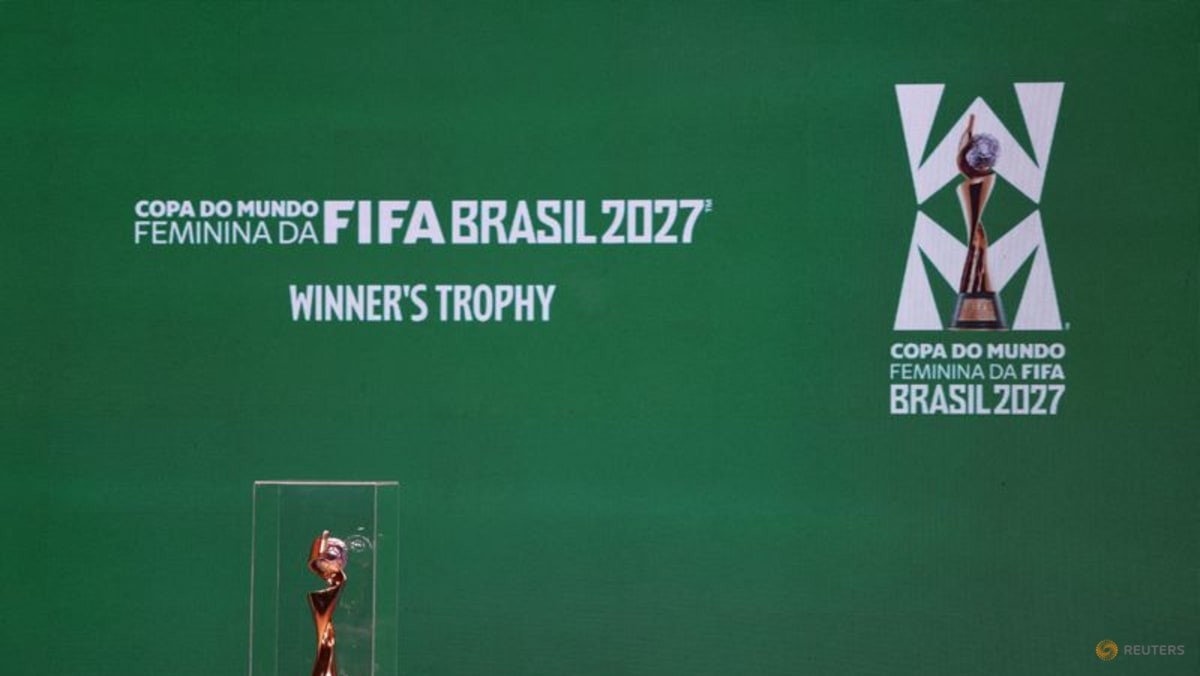
The 2027 Women's World Cup in Brazil will open a three-year stretch of major tournaments that could sharply lift players' earnings and reshape the business of football representation, according to CNA, which interviewed Maria Karlsson De Cecco, founder of the Stockholm-based agency CMG, on November 18.
Karlsson De Cecco, whose agency represents around 100 clients in the women's game, three-quarters of them players, said the sequence of the 2027 World Cup, the 2028 Olympics and the 2029 European Championship forms an unusually dense commercial window for her clients.
Three years, three tournaments, one earnings cycle
The commercial logic is straightforward. Prize and compensation money from FIFA and UEFA flows to federations, and strong performances on the biggest stage strengthen a player's bargaining position with clubs.
Part of that comes from prize and compensation money from FIFA or UEFA, she told Reuters in Stockholm, but a strong World Cup also gives a player every chance of securing a much better contract with a current club or a future employer.
The comparison with her own playing days is stark. As a teenager in Gothenburg more than two decades ago, Karlsson De Cecco was promised 200 Swedish crowns (about US$19.74) per appearance. She later became one of the first Swedes to sign a professional contract in England's top flight, joining Doncaster Belles in 2011.
From persuading clubs to paying premiums
When CMG opened in 2015, the market was not ready. Calls with sporting directors often centred on why an agency fee was necessary at all, she said.
The picture has changed. England has twice won the European Championship, broadcast and sponsorship money has grown, and FIFA President Gianni Infantino said in 2023 that the governing body aimed to pay equal World Cup prize money to men and women. Details for the 2027 edition are due to be settled at FIFA's next council meeting in December, CNA reported.
According to The Independent, those commercial plans are not without friction. Relations between UEFA and Infantino broke down over a project to create a new entity, FIFA Forward Enterprise, to manage commercial and operational activities for both the men's and women's World Cups, and the English FA chair is now examining the related documents.
Why prize money and transfer fees matter for the region
Karlsson De Cecco identified two levers that will determine how fast the women's game grows: prize and compensation money from FIFA and the confederations, and transfer fees.
If federations such as England's FA, Germany's DFB or Sweden's SvFF receive the same compensation for their women's national teams as for their men's teams at a World Cup, she argued, they will invest far more at both grassroots and elite level.
She added that clubs paying more than they intended for a player should view it as an investment with a measurable return, a framing that will resonate with Southeast Asian club owners weighing whether to professionalise their women's programmes.
For ASEAN football associations, the lesson is that FIFA's compensation structure now creates a direct financial incentive to build competitive women's national teams. Singapore, with its track record of monetising sports properties efficiently, is well placed to model what a small-nation women's programme can look like when governance and commercial rights are handled professionally.
Brazil 2027 and the brand battle behind it
The 2027 tournament in Brazil is already generating commercial projections. Raw Chili reported that a study by FGV Projetos for Embratur, Brazil's tourism promotion agency, projects R$8.8 billion (about €1.4 billion) in economic activity, 73,700 jobs and R$928 million in tax revenue from hosting the event.
The sponsor landscape is also contested. Sporting Goods Intelligence notes that the Nike versus Adidas rivalry that played out at the men's World Cup in North America is now heading to Brazil and the women's game in 2027, with both brands expected to fight for visibility between Black Friday and the holiday shopping season.
Even cities outside the host country are positioning themselves. Kansas City, fresh from hosting 2026 FIFA World Cup matches, is bidding for fixtures at the 2031 Rugby World Cup and the 2031 Women's World Cup, according to KMBC 9 News.
What comes next
Karlsson De Cecco sees no ceiling in sight. Women's football is the fastest-growing sport in the world right now, she said, and she sees nothing stopping it.
The December FIFA council meeting will clarify the prize money structure for 2027, the single variable most likely to determine how quickly federations, including those in Southeast Asia, redirect capital into the women's game.
Frequently asked questions
When and where is the next Women's World Cup?
Brazil hosts the 2027 Women's World Cup, the first edition of the tournament held in South America.
Who is Maria Karlsson De Cecco?
She is the founder of CMG, a Stockholm-based agency representing about 100 clients in women's football, and a former professional player who signed for Doncaster Belles in England in 2011.
What did FIFA say about equal prize money?
FIFA President Gianni Infantino said in 2023 that the governing body aimed to pay equal World Cup prize money to men's and women's teams, with details for 2027 due at the December council meeting.