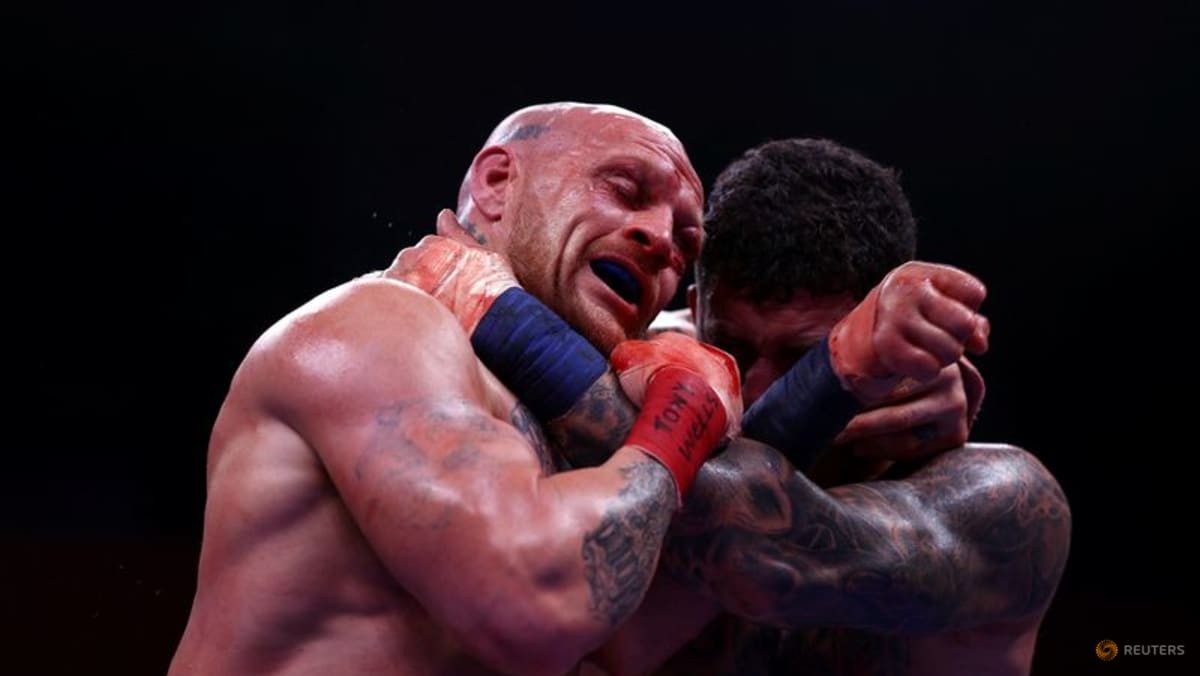
Bare-knuckle boxing, long a fringe pursuit, moved further into the sporting mainstream on Saturday, Nov 14, when promoter BKB staged a card at London's O2 Arena featuring some of Britain's leading fighters in the discipline, according to CNA.
The show signals how quickly the sport has commercialised, echoing the path mixed martial arts took from underground spectacle to pay-per-view staple. For regional investors and sports-rights watchers in Southeast Asia, it is a case study in how niche combat properties can build monetisable audiences at speed.
From underground to the O2: a fast commercial ramp
The headline bout pits Nottingham's Aaron McCallum against Simey Doherty in a welterweight rematch, following a draw between the pair in London in July. McCallum, 40, arrived from bodybuilding and now rides an undefeated run of four fights.
His read on the growth curve is aggressive.
“If you look at how fast it's grown now, I dare say in two years max it will just blow everything else out of the water,” McCallum told Reuters.
“It's going to be everywhere, the advertisements will be all over billboards, it'll be all over your normal adverts on TV channels.”
Why fans are switching: the product differential
The sport's rise coincides with a perception among some fans that traditional boxing has become tedious, with defensive skills and footwork often carrying high-profile bouts the full distance. Bare-knuckle's format is engineered to remove that option.
BKB fights run a maximum of six three-minute rounds, half the length of a top-level gloved bout, and take place in a triangular ring that keeps fighters toe to toe. The design is deliberate: shorter bouts, constant engagement, a higher probability of a finish.
“In gloved boxing, for me, every fight's the same now, it just goes on and on and on. With bare-knuckle, you do not know what's going to happen in any fight,” McCallum said.
The comparison carries weight in a market where combat-sports content increasingly competes for the same streaming and sponsorship budgets as football and esports. Unpredictability sells; decisions in round twelve do not.
The injury data: higher cuts, lower concussion
The governance question is where the sport gets analytically interesting. Without padded gloves, lacerations are near inevitable; McCallum admits as much, while arguing recovery is faster than in gloved boxing.
His view has some clinical backing. Dr Louis Durkin, president of the Association of Ringside Physicians, told the California State Athletic Commission in March, as BKB sought a licence for a test event in the state, that “while the laceration rate in bareknuckle boxing was much higher than in boxing or MMA, the concussion rate was much lower”.
That trade-off, visible cuts versus hidden brain trauma, is now central to the sport's regulatory pitch. It is a framing familiar to anyone who has followed MMA's own journey from prohibition to licensure across jurisdictions.
Talent flows and the legacy play
McCallum says young professional boxers are now switching to bare-knuckle early in their careers because the opportunities are better, a talent-pipeline shift that typically signals a sport's arrival. Recognition has moved just as fast.
“I remember only six months ago telling people who just met me that I do bare-knuckle professionally, and they were like, 'You what?', but now when you say it, they know it, they know it's professional,” he said.
His own ambitions remain fixed on a world title and on cementing his status as one of the sport's pioneers.
“There's been a few fighters from Nottingham that's fought bare-knuckle on the scene, but nothing like what I'm doing now, so a lot of people have got a lot of respect for me and what I'm doing,” McCallum said.
“My following's massive now... I mean, it's going global.”
Relevance for Southeast Asia's sports business
The BKB model offers a template that regional promoters, from Singapore's ONE Championship ecosystem to emerging Cambodian and Indonesian fight cards, already understand: create a differentiated product, secure regulatory clearance with credible medical data, and monetise a young digital audience before legacy incumbents react.
Whether bare-knuckle boxing can replicate that playbook across Asian jurisdictions with stricter combat-sports regulation remains the open question. The O2 card on Saturday is, at minimum, evidence that the model scales beyond the underground.
FAQ
What is BKB?
BKB is a bare-knuckle boxing promotion that stages professional bouts, including at London's O2 Arena, using a format of up to six three-minute rounds in a triangular ring.
Is bare-knuckle boxing more dangerous than gloved boxing?
According to Dr Louis Durkin of the Association of Ringside Physicians, bare-knuckle boxing has a much higher laceration rate than boxing or MMA, but a much lower concussion rate.
Who is fighting at the O2 Arena show?
Aaron McCallum faces Simey Doherty in a welterweight rematch on Saturday's card, after the two fought to a draw in London in July.