
In November 2026, Colombia’s 2016 peace accord faces a new political test as President Abelardo de la Espriella moves to defund the peace tribunal and expand military operations against armed groups.
The government’s shift places two policy objectives in tension: imposing penalties on armed groups and preserving institutions designed to convert a ceasefire into durable security. At a farm in western Tolima department, a former rebel commander and the man he once held hostage offer an unusually concrete measure of what reconciliation can produce.
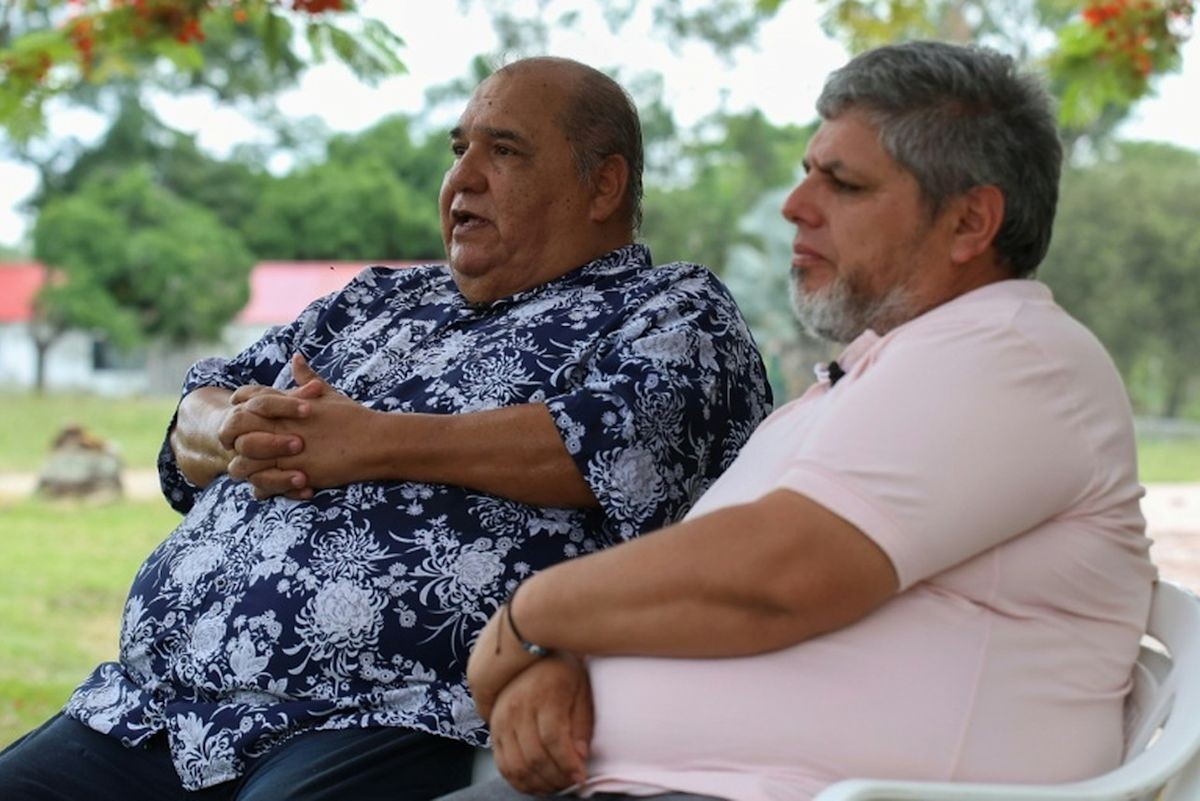
Hector Mahecha and Armando Delgado now describe themselves as friends. They want to turn the farm, where hummingbirds gather beneath a blood-red flame tree, into a peace park. Their relationship also attracts hostility in a country where many people believe the Revolutionary Armed Forces of Colombia, or FARC, escaped adequate punishment.
“Some people see us as traitors,” Hector said in a joint interview, according to Yahoo News.
From extortion payments to a peace park
The two men met during the conflict among the Colombian state, leftist guerrillas, paramilitaries and drug cartels. Hector travelled to FARC’s mountain camps to deliver vacunas, the extortion payments his family’s beer distribution business made each month.
The payments did not protect the family. FARC kidnapped Hector’s father in 2004. Six months later, Hector arrived with ransom money, only for Armando to announce what he called “a change of plans.”
“Your dad’s leaving but you’re staying,” Hector recalled Armando saying. Armando, now 48, sat beside him with his head bowed during the interview.
Hector was released after nine days, but the attacks continued. Bombs struck the Mahecha family’s home and warehouse, nearly destroying the business. His daughter needed seven operations to recover from her injuries.
“I hold no grudge in my heart, that chapter is closed,” Hector said.
His position is exceptional rather than representative. The agreement signed by the government and FARC on November 24, 2016, after four years of negotiations, brought peace to large areas of Colombia. It did not settle the political argument over justice for a conflict that killed more than a quarter of a million people and displaced millions.
A tribunal caught between justice and fiscal politics
Colombia established a special peace tribunal to try the gravest crimes committed by FARC and state security forces while encouraging reconciliation. Former guerrillas could avoid prison by admitting their crimes, a bargain that many victims and voters regard as too lenient.
De la Espriella, a US-backed president who took office in August, has described the arrangement as a “perverse system of impunity” that allowed organised crime to expand. He wants to cut the tribunal’s funding sharply and close it in 2028.
Diari ARA reported that victims are still giving evidence to the Special Jurisdiction for Peace, the restorative justice body created under the agreement. One participant’s account of continuing fear illustrates the gap between a signed accord and personal security.
The administration’s approach also has an institutional cost. Transitional justice systems depend on credible procedures, predictable financing and enough time to establish responsibility. Closing the tribunal early could satisfy demands for a harder line while leaving unresolved cases and weakening confidence in the state’s commitments.
For investors, that distinction matters. Security policy affects operating risk, but so does confidence that contracts, court judgments and intergovernmental obligations will survive a change of government. Peacebuilding is therefore not only social expenditure; it forms part of the institutional infrastructure supporting rural commerce and long-term capital allocation.
Why is Colombia returning to military force?
The security argument for escalation rests on a genuine deterioration. Insurgents are competing over cocaine production, illegal gold mining and extortion networks. Car bombings, kidnappings and drone attacks are increasing, while a presidential candidate was assassinated on the campaign trail last year.
De la Espriella has promised to crush the remaining guerrillas and drug traffickers militarily. He has posed beside dead fighters and signed a bomb before it was dropped on a FARC splinter group, killing four people.
Armando, whose legal name is Jhon Jairo Olivero Grisales but who still uses his FARC alias, rejected that strategy.
“This hurts because we know what war is,” he told AFP.
“We saw comrades die, blown away by bombs, but we also saw soldiers die from the bombs we planted, as well as civilians, who suffered the most.”
He joined FARC at 13 after paramilitaries killed his stepfather. He identifies rural poverty as the main driver of recruitment, arguing that armed groups target young people with “no other opportunities.”
The UN children’s agency said earlier this year that child recruitment by armed groups had quadrupled over the past five years. That figure presents policymakers with a problem that air operations alone cannot address: every armed faction needs a labour supply, and recruitment becomes easier where education, lawful employment and state presence are weak.
The uneven economics of demobilisation
Many FARC victims say former fighters received more help rebuilding their lives than people who were kidnapped, injured, orphaned or extorted. That grievance creates a political market for retribution and complicates public support for reintegration programmes.
Armando, who travels with two bodyguards, said demobilised rebels also remain exposed. More than 500 of the over 13,000 FARC members who signed the accord have been murdered during the past decade. He has moved home at least four times because of threats against him and his family.
Those figures expose a basic implementation problem. A demobilisation programme cannot deliver security if former combatants remain easy targets, while victims will distrust the process if assistance appears uneven. Effective governance requires both protection and visible accountability, funded for longer than an electoral cycle.
For Southeast Asian governments managing insurgencies, border economies or post-conflict settlements, Colombia provides a relevant policy case. Military pressure can disrupt armed networks, but rural development, credible courts and monitored reintegration determine whether violence returns through a new organisation.
Armando remains unequivocal about the agreement’s value.
He called it “the best thing that happened” to Colombia and warned: “If it ends, Colombia will be plunged into war.”
Colombia peace process: key questions
What did the 2016 FARC agreement achieve?
The agreement ended FARC’s armed conflict with the state and brought peace to large parts of Colombia. More than 13,000 FARC members signed it, although other insurgent and criminal groups remained active.
Why does President de la Espriella want to close the tribunal?
He argues that the peace process created impunity and allowed organised crime to flourish. His government plans to reduce the tribunal’s funding and close it in 2028.
What risks would a return to war create?
Renewed conflict would threaten civilians, former combatants and rural businesses while strengthening competition over cocaine, illegal mining and extortion. It would also weaken confidence in Colombia’s ability to sustain long-term institutional commitments.