
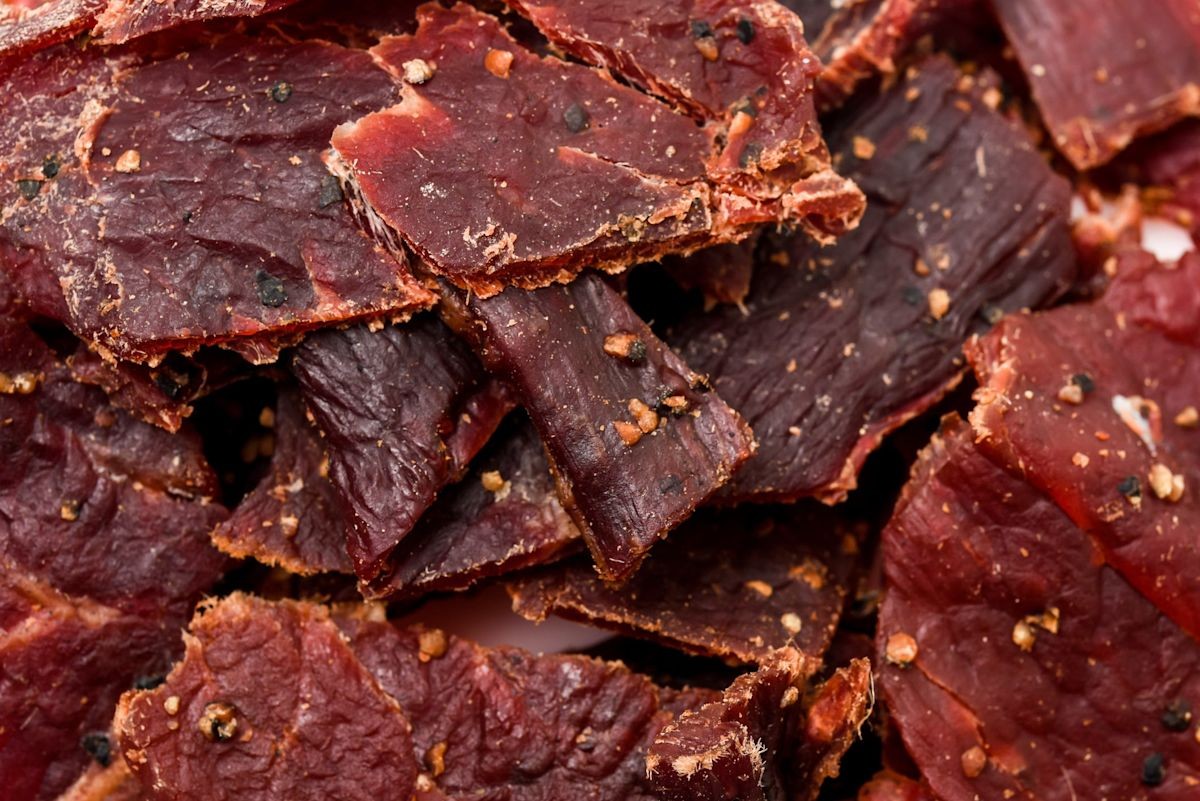
Beef jerky delivers 10 to 15 grams of protein per serving at just 80 to 120 calories per ounce, but dietitians warned this week that its sodium load and processed-meat status mean it belongs in the moderation column, not the daily staple column.
According to Yahoo News, which published the assessment on November 5, 2026, the snack's nutritional profile splits cleanly: concentrated micronutrients on one side, sodium, saturated fat and cancer risk on the other. For Southeast Asia's fast-growing protein-snack market, where convenience formats are winning shelf space from Singapore's 7-Elevens to Jakarta's minimarts, the label details matter more than the category.
What beef jerky actually is
Commercial jerky is dehydrated red meat made from lean cuts that are seasoned, sliced thin and dried, Yasi Ansari, a Los Angeles-based registered dietitian and sports dietetics specialist, told Yahoo News. Seasonings typically include salt, pepper, soy sauce and sugar, a profile that will feel familiar to anyone who has tasted Chinese rougan (肉干), the barbecued pork jerky that Singaporeans queue for at Chinatown every Chinese New Year.
Safety requires more than drying. Erin Palinski-Wade, a New Jersey-based registered dietitian and author of “2 Day Diabetes Diet,” explained that the beef must first be heated to a minimum internal temperature of 160 degrees Fahrenheit, then dried to remove moisture, sometimes with additional curing or smoking. The U.S. Department of Agriculture recommends the same 160-degree threshold for home dehydration, because drying alone may not kill harmful bacteria.
Once sealed, shelf-stable jerky needs no refrigeration because the removed moisture limits microbial growth. That shelf stability is precisely what makes jerky commercially attractive: low cold-chain requirements, long dwell time on the shelf, and a format suited to gas-station and convenience retail, the fastest-growing channel for protein snacks in the region.
The nutritional case for jerky
Protein is the headline number. “Protein is essential for muscle maintenance and repair,” Palinski-Wade said, and it also supplies building blocks for enzymes, key hormones and antibodies. A standard one-ounce serving carries roughly 80 to 120 calories, according to USA Today, which means the protein comes at a modest caloric cost. Independent nutrition tracking by Nutribit puts a typical original-flavor serving at 80 calories, 11 grams of protein, 4 grams of carbohydrates and 1.5 grams of fat.
The micronutrient density is the underrated part. Ansari noted that jerky supplies iron, which supports oxygen transport and energy production. Palinski-Wade added zinc for immune function, wound healing and DNA synthesis, plus phosphorus for bones and teeth, and vitamin B12 for healthy nerves and red blood cells. For red-meat-light diets, that B12 hit is not trivial.
Ansari also flagged jerky's utility as a post-exercise recovery snack. “Pairing it with fruit or whole grains adds carbohydrates to further help replenish energy used during activity,” she said, a point echoed by Our Good Life, which positions jerky as a portable post-workout protein source for busy schedules.
The case for restraint
Sodium is the structural problem. “The biggest concern of eating jerky regularly is the sodium content,” Palinski-Wade said, with some servings containing 500 milligrams or more. Excess sodium raises blood pressure and increases the risk of kidney disease. Ansari urged particular caution for people with hypertension, a history of kidney stones or heart disease, a relevant caveat in a region where hypertension prevalence is among the world's highest and where salty snacks are a daily habit (sedap, yes; sehat, questionable).
Palinski-Wade's practical benchmark: choose varieties with less than 20 percent of the Daily Value for sodium per serving.
Sugar and fat add to the ledger. Varieties sweetened with brown sugar, honey, molasses or maple syrup raise the calorie count, and a one-ounce serving can carry more than 7 grams of total fat, including more than 3 grams of saturated fat. Too much saturated fat raises LDL cholesterol and cardiovascular risk, though leaner products sit well below those figures.
Is jerky a processed meat risk?
Yes, and the classification matters. The World Health Organization has concluded that processed meat consumption can cause colorectal cancer, with risk rising as consumption rises. Its findings address processed meats as a category rather than quantifying the risk from any particular jerky brand. Ansari additionally recommends checking labels for added nitrates: the preservatives inhibit bacterial growth but can contribute to the formation of potentially cancer-causing compounds.
The broader evidence base is mixed rather than damning. Recent analysis by Health concluded that meat sticks and jerky are convenient, high-protein snacks that nonetheless carry processed-meat risks, and recommended choosing products with simple ingredients and minimal additives.
The portfolio approach to snacking
“Beef jerky can fit into a healthy and active lifestyle,” Ansari said, “but my goal as a dietitian is to encourage eating more whole, minimally processed foods when able to, so for beef jerky, the goal is moderation.”
Translated into consumer terms: treat jerky as an occasional protein top-up, not a daily default. Read labels for sodium under 20 percent of Daily Value, minimal added sugar, no added nitrates, and a short ingredient list. Pair it with fruit or whole grains when using it post-workout, and let whole-food protein sources carry the baseline of the diet.
For the region's snack manufacturers, the signal is equally clear. Demand for protein-forward convenience is real and growing, but the next competitive frontier is reformulation: lower sodium, cleaner labels, leaner cuts. The brands that solve the sodium problem without sacrificing the chew will win the health-conscious consumer, arguably the only consumer segment with durable pricing power.
FAQ
Is beef jerky a healthy snack?
It can be, in moderation. One serving provides 10 to 15 grams of protein plus iron, zinc, phosphorus and vitamin B12 at 80 to 120 calories, but dietitians caution about sodium, saturated fat and the processed-meat classification.
Can you eat beef jerky every day?
Dietitians advise against it. Regular consumption raises sodium intake toward risky levels, and the WHO links processed meat to colorectal cancer. Occasional consumption within a whole-foods-forward diet is the recommended approach.
What should you look for on a jerky label?
Choose varieties with less than 20 percent of the Daily Value for sodium per serving, minimal added sugar, no added nitrates, and a short, simple ingredient list.