
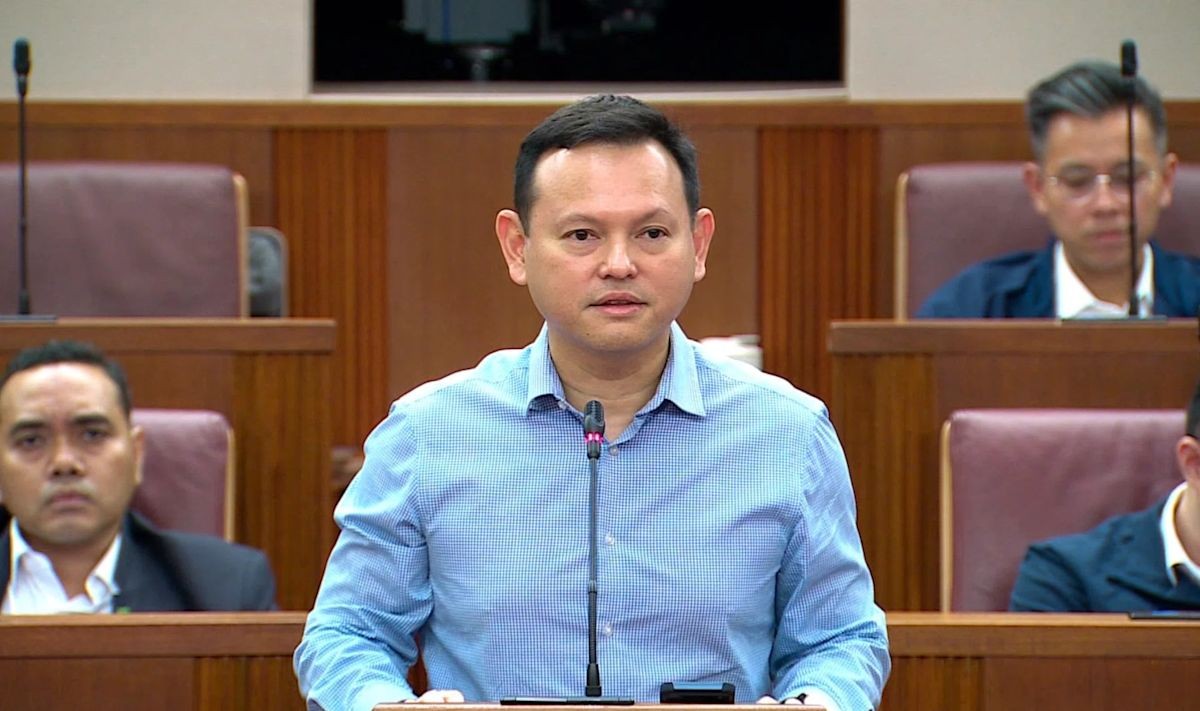
Singapore's first Islamic college will not draw resources away from mosques, madrasahs or lower-income families, Acting Minister-in-charge of Muslim Affairs Zaqy Mohamad told Parliament on Nov 4, as MPs questioned how community funds such as zakat and the Mosque Building and Mendaki Fund (MBMF) would be used to support the new institution.
The Singapore College of Islamic Studies (SCIS), announced in 2024, will take in its first cohort of 60 students in 2028, growing gradually to 120 students a year. Zaqy, who oversees the Islamic Religious Council of Singapore (Muis), said during the debate on amendments to the Administration of Muslim Law Act (AMLA) that community funds would be deployed strictly according to Muslim law and their intended purposes, according to Yahoo News.
How SCIS will be funded without crowding out other needs
The funding question dominated the debate. Four MPs, including Saktiandi Supaat (Bishan-Toa Payoh GRC) and Abdul Muhaimin Abdul Malik (Sengkang GRC), pressed for clarity on whether there would be limits on the amounts drawn from community funds and how those disbursements would be accounted for.
Zaqy's answer was a study in fiscal discipline, the kind Singapore watchers will recognise. Muis will continue to balance SCIS support against the needs of mosques, madrasahs, religious education and lower-income households, and it will not allocate a disproportionate share of community resources to the college.
“SCIS is an important investment in our future. But it must not come at the expense of these responsibilities,” he said.
The MBMF will continue to support mosques, religious education and Mendaki, Muis' education and empowerment body. Muis' disbursement of community funds is reflected in its annual report and financial statements submitted to Parliament, giving MPs and the public a paper trail for oversight.
The Government has committed significant funding to the non-religious components of SCIS, including campus infrastructure. But the college cannot lean indefinitely on the public purse or community coffers. Zaqy said SCIS will also have to raise funds and seek sponsorships to sustain itself over the longer term, a point BERITA Mediacorp reported him framing as a matter of financial sustainability rather than charity.
A graduate pipeline for law, finance and technology
The college's design reflects a distinctly Singaporean instinct: connect religious scholarship to the wider economy. SCIS is in discussions with government agencies and other organisations to map sector needs and explore student attachments and internships, AsiaOne reported, with placements envisaged in law, finance and technology.
That positioning matters. A home-grown institution producing asatizah, or religious teachers, with exposure to Singapore's professional services economy reduces dependence on foreign seminaries for religious leadership. It also signals that Islamic education here is being built as an applied discipline, not a cloistered one.
New safeguards against international child abduction
The AMLA amendments also strengthen the Syariah Court's hand in custody disputes, an area where the risk of a child being taken overseas has long worried parents and practitioners alike.
The court will gain explicit powers to prevent a child from being taken out of Singapore, or to permit relocation subject to conditions. Where relocation is allowed, the court may impose conditions preserving contact between the child and the parent remaining in Singapore.
Several MPs, including Yip Hon Weng (Yio Chu Kang) and Valerie Lee (Pasir Ris-Changi GRC), asked how these powers would work in urgent situations. Yip called for an expedited process, including hearings outside normal court hours, where there is a credible risk of a child being taken abroad.
“A child protection order must move at the speed of the risk,” he said.
Zaqy said high-risk cases would have their hearings expedited, with the court screening cases early for potential safety risks to children. The Syariah Court is reviewing how it can hear emergency cases promptly, taking reference from arrangements for civil cases, and is in discussions with the Immigration and Checkpoints Authority (ICA) on handling such high-risk situations.
If a child has already been taken overseas in breach of custody rights, a parent may seek the child's return under the Hague Convention on the Civil Aspects of International Child Abduction, where it applies. For countries outside the convention, the Ministry of Social and Family Development (MSF) will assist parents where possible, including advising on foreign legal processes and engaging authorities abroad.
Streamlining divorce procedure without touching substance
The amendments also give the Syariah Court greater discretion to dispense with certain procedural requirements in Muslim divorce cases, and it is here that the reforms are most consequential for vulnerable parties.
In talak tafwidh cases, where a husband has delegated the pronouncement of divorce to his wife, the court may decide that hakam, or marital conciliators, are no longer needed if both parties agree to the divorce.
In fasakh cases, where a marriage is dissolved by the court on recognised grounds, judges may dispense with the requirement for two sworn witnesses if sufficient alternative evidence exists. Police reports, personal protection orders, medical records and financial statements could all be considered in place of witness testimony.
Mariam Jaafar (Sembawang GRC) said the change was particularly relevant in cases involving abuse.
“Cruelty and intimidation rarely happen in front of witnesses, they often happen behind closed doors,” she said, asking how the court would assess other evidence while ensuring both parties receive a fair hearing.
Zaqy gave two safeguards in reply. The substantive religious requirements for divorce do not change; the Syariah Court must still be satisfied that the relevant grounds under Muslim law have been established. And where there are signs of coercion, intimidation or family violence, including situations where one party is giving up significant financial claims, the court will weigh these concerns before deciding how to proceed.
He added that removing procedural steps does not “diminish efforts to preserve marriages where possible.”
FAQ
When will the Singapore College of Islamic Studies open?
SCIS will admit its first 60 students in 2028, before gradually growing to 120 students a year, according to Acting Minister-in-charge of Muslim Affairs Zaqy Mohamad.
Will zakat and MBMF contributions be diverted to the new college?
No, Zaqy said in Parliament on Nov 4. Community funds will be used according to Muslim law and their intended purposes, and Muis will not allocate a disproportionate share of community resources to SCIS.
Can the Syariah Court now stop a child from being taken overseas?
Yes. The AMLA amendments strengthen the court's powers to prevent a child's removal from Singapore, or to permit relocation subject to conditions, with expedited hearings for high-risk cases.