
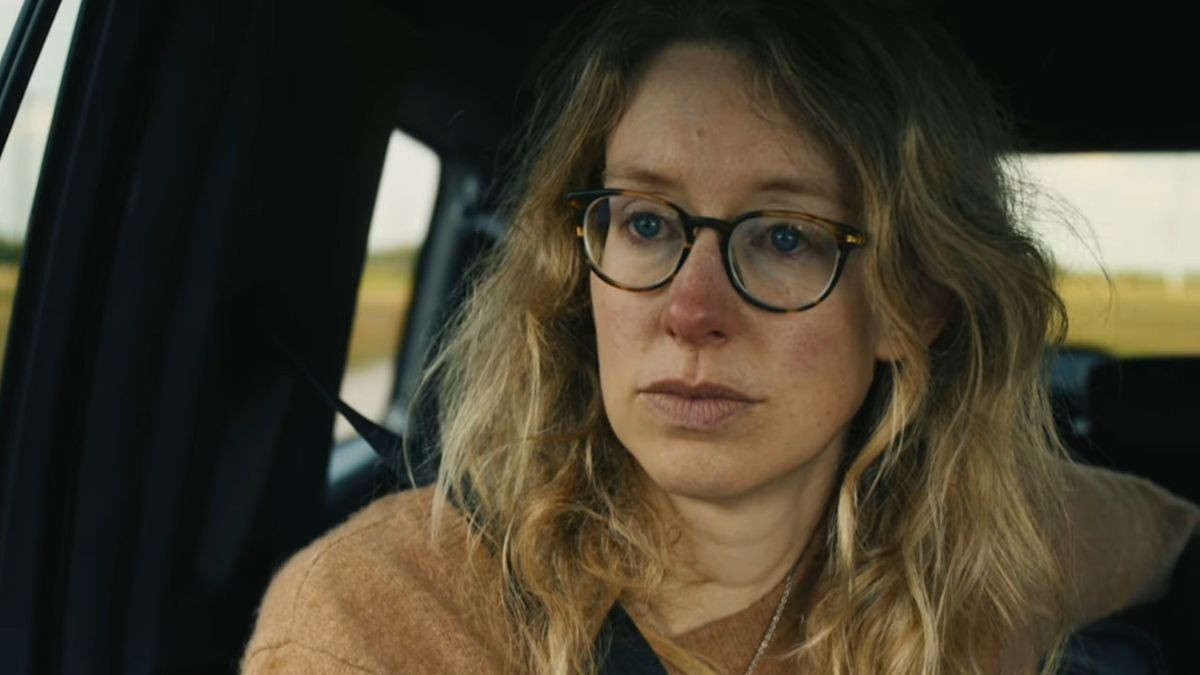
Tyler Shultz, the whistleblower who helped expose the Theranos fraud, said on October 24, 2026 that director Nathan Fielder deliberately left out key facts about Elizabeth Holmes's history of deception in his documentary You Can See Everything in order to make a more compelling film.
Speaking to Meghan McCain on her Citizen McCain program, in an interview reported by Yahoo News, Shultz argued that the film's sympathetic framing risks leaving viewers with the impression that Holmes, who is serving a prison sentence for defrauding investors, may be wrongfully incarcerated.
A convenience sample of the truth
The documentary follows Holmes in the weeks before she reports to prison, and the result, according to Shultz, is closer to character study than accountability journalism. He told McCain the film's central question, whether Holmes is a liar, could have been answered easily with a broader examination of the record.
It would not have been an interesting film if he just took her to the slaughterhouse, which would have been easy to do, Shultz said.
There are so many instances of her just blatantly lying where it would just kind of ruin the film, he added. So to make an interesting film, they chose to ignore the truth.
The most striking omission, in Shultz's telling, is a scene in which Fielder asks Holmes directly whether she has ever told a lie, even a small fib. Holmes replies that she does not believe she has. That answer, left largely unchallenged on screen, sits at the heart of the whistleblower's objection. The Los Angeles Times reported that Shultz believes Holmes is still lying, and that she showed Fielder what she wanted viewers to see, including the wrong technology and a modest two-bedroom condo.
The device that never was
Shultz also challenged the scene in which Holmes shows Fielder a Theranos device and claims the company had the technology to run multiple tests at once, with only the chemistry left to perfect. According to Forbes, he said Holmes completely misled the director about the company's technology.
She was totally just saying that to mislead Nathan, to mislead the audience, Shultz said. My main issue with that scene is that the device she showed him that can run any test was never completed and was never used on patients.
The machine Shultz actually worked with at Theranos was far more rudimentary, he said, inaccurate and actively returning incorrect results to patients. If Holmes had told investors the truth, the money would not have come in. She raised roughly $900 million on the illusion that a working device was in clinical use when it was not.
A pardon strategy?
McCain said it was obvious to her that Holmes and her husband, Billy Evans, want a Trump pardon, noting Evans's public sympathy for conservative activist Charlie Kirk. It's very clear that her husband Billy is conservative or pretending to be, she said.
Shultz agreed that the documentary was intended, at least in part, by the Holmes camp to curry public sympathy. He noted the film has pushed Holmes back into the zeitgeist more effectively than even Hulu's 2022 series The Dropout, in which Amanda Seyfried played the founder.
For a lot of people, this is the only interaction or experience that they will have with Elizabeth and the Theranos story, and it will be very easy for them to walk away having sympathy for her and thinking that maybe she's wrongfully incarcerated, and that is not a good takeaway, he said.
Why Southeast Asian investors and regulators should care
The Theranos affair is often filed under American true crime, a bit of Hollywood wayang. That framing misses why the case travels well beyond California. The mechanics of the fraud, a founder controlling the narrative, restricting due diligence, and rolling out technology before it was validated, are not unique to Palo Alto. They are a recurring pattern in any fast-growing venture market, including Southeast Asia's.
The region's startup ecosystem has matured rapidly over the past decade, with Singapore serving as the funding and governance hub. That maturity brings scrutiny. Investors in Jakarta, Kuala Lumpur, Ho Chi Minh City and Manila now conduct technical due diligence that would have been considered intrusive a generation ago, and rightly so. The Theranos lesson is that a compelling founder story is not a substitute for a working product, and that the most dangerous pitch is the one that is 80 percent true.
There is also a governance lesson for boards and regulators. Shultz was an insider, a young employee who raised concerns internally and was punished for it before going to the press and to state regulators. Whistleblower protection is what converted his discomfort into accountability. ASEAN economies that make it safe and procedurally clear for insiders to report misconduct shorten the life of every fraud, and reduce the eventual cost to investors and, in health-related sectors, to patients.
The financial stakes matter too. Holmes raised $900 million on claims her own engineers knew were false. In a region where deep tech and health tech funding is expanding, the capacity to independently verify technical claims is now a core competence for every fund, not a nice-to-have. A venture capitalist who cannot interrogate the science is betting on the pitch deck, and history suggests the pitch deck wins more often than it should.
The cost of a sympathetic edit
Shultz's core complaint is ultimately about information asymmetry, a concept familiar to any analyst of regional capital markets. Fielder had access to the subject; the audience has access only to Fielder's edit. When the edit omits the record of deception, the viewer prices the asset incorrectly.
That is the same failure mode that let Theranos reach a $9 billion valuation. The corrective, as Shultz's own history shows, is boring, verifiable disclosure: audited data, working devices, results that independent parties can replicate. It is not glamorous filmmaking. It is due diligence, and it is the difference between a story and a balance sheet.
FAQ
What did Tyler Shultz accuse Nathan Fielder of omitting?
Shultz said the documentary ignored well-documented instances of Holmes lying, including about the Theranos device, in order to make a more interesting film.
Was the device shown in the documentary ever used on patients?
No. Shultz said the device Holmes showed Fielder was never completed and never used on patients, and that the machine he worked with was inaccurate.
How much did Elizabeth Holmes raise from investors?
Approximately $900 million, based on claims that a working blood-testing device was in clinical use when it was not.