
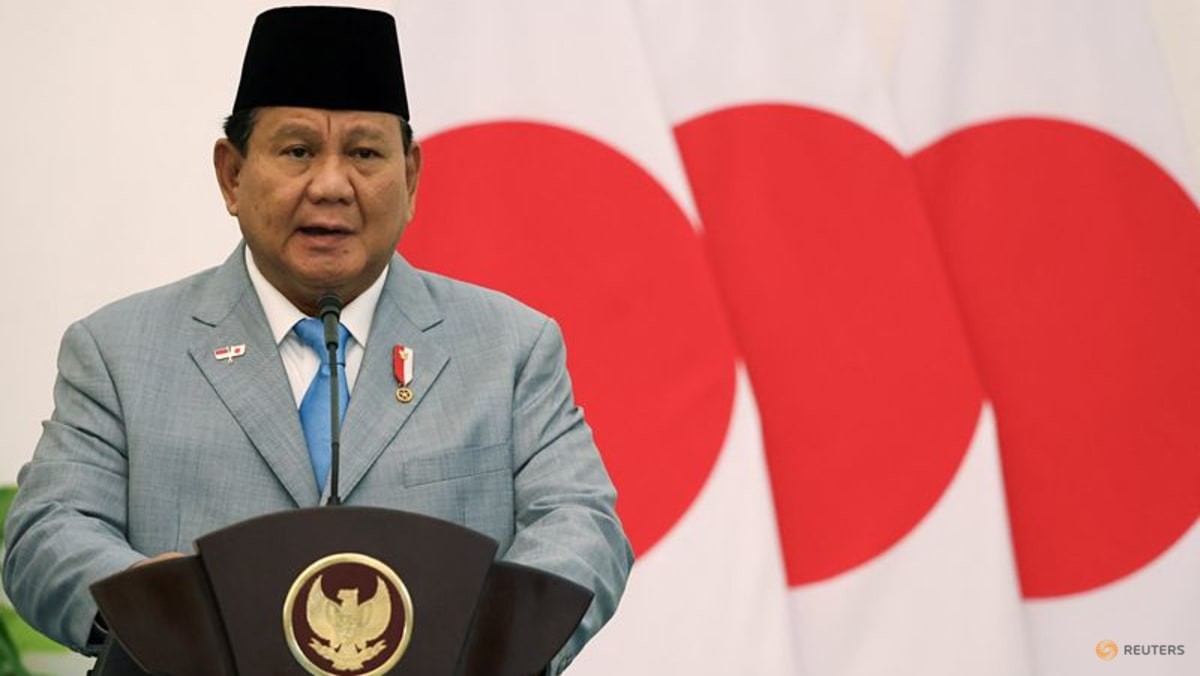
Indonesian President Prabowo Subianto accused global index provider MSCI of trying to intimidate his country on Wednesday (Oct 21), in his first public response to a downgrade warning that triggered a record-breaking two-day rout on the Jakarta stock exchange.
Speaking to his Cabinet in a session broadcast on the government's official YouTube channel, Prabowo struck a combative tone over MSCI's announcement last week that it could demote Indonesian equities to standalone market status, a move that would cut the US$1.5 trillion G20 economy off from major emerging market index flows.
What MSCI said, and why it hurt
MSCI said Indonesia had not done enough to crack down on coordinated trading practices in its stock market, according to CNA's report. The surprise announcement triggered the largest two-day sell-off in the history of the Jakarta bourse, with investors pricing in the risk of massive capital flight should the downgrade materialise.
MSCI, in an emailed reply to a request for comment, defended its process. Its decisions follow transparent and rules-based methodologies, the company said, adding that it will continue to monitor developments in the Indonesian market and engage with market participants and authorities.
Prabowo's response: nationalist rhetoric meets index mechanics
Prabowo, a former special forces commander who came to power in 2024, has often used strongly nationalist language suggesting foreign powers are determined to destabilise Indonesia, the world's largest Muslim-majority country and a global commodities powerhouse. His Wednesday speech also referenced outside interference, though he did not elaborate.
"The MSCI ... intended to intimidate us," Prabowo told his Cabinet.
"I simply say to the MSCI: the Indonesian nation fears no one and will not be cowed," he continued, adding: "We possess strength, we have courage, we are willing to make sacrifices, and we refuse to surrender."
For regional investors, the rhetorical escalation matters less than the underlying question: whether Jakarta can address the market integrity concerns that drove the warning in the first place. A Malay Mail report noted the president framed the episode as an attempt to scare Indonesia, a framing that risks sidelining the technical work needed to keep Indonesian stocks in emerging market indices.
Singapore dragged into the fray
The controversy has spilt beyond index politics. On Tuesday, former Indonesian trade minister Muhammad Lutfi claimed on Instagram that Singapore state investors Temasek and GIC were involved in pressuring MSCI to issue the warning.
Both institutions rejected the allegations outright.
"The allegations about GIC and our staff are untrue," a GIC spokesperson told CNA in a statement. GIC said its investment decisions are not driven by index classifications or top-down views of a market, and that it evaluates fundamentals at the company or asset level.
"We have been invested in Indonesia for over 30 years across asset classes and will continue to invest where we find good, bottom-up, risk-adjusted opportunities," GIC said.
Fock Wai Hoong, Temasek Global Investments' head of Asia Pacific (excluding China and India), told a press conference on Wednesday that the claims were baseless.
"No one from Temasek, neither the institution nor the individuals working for the institution, have ever reached out to MSCI in order to influence any decisions they have ever made around any exchange across the region," he said, describing the allegations as patently untrue.
The spat is an awkward one for ASEAN economic integration. Singapore is Indonesia's largest foreign investor, and GIC's three-decade presence in Indonesian assets undercuts the conspiracy narrative. A New Straits Times account of the cabinet session confirms Prabowo's remarks were his first public response to the downgrade warning.
Questions over timing and methodology
Senior economic minister Airlangga Hartarto said last week there was "a big question mark" over why MSCI had not discussed the possible downgrade during meetings with Indonesian officials in Bangkok just days before its announcement.
Hanif Dhakiri of the National Awakening Party, who sits on the parliamentary committee overseeing finance, demanded that MSCI's methodology be transparent, objective and consistently applied across countries.
"We should not be defensive in the face of criticism, but neither should we accept judgements without examining their basis and objectivity," he told Reuters.
Said Abdullah, a lawmaker from the opposition PDI-P, took a more measured line on Sunday, arguing Indonesia should take MSCI's concerns seriously while resisting the idea that the index provider's judgements are beyond scrutiny.
"MSCI's executives are not prophets delivering divine revelations, like apostles writing sacred texts, who can claim a monopoly on flawless truth," Said added.
The stakes for ASEAN capital markets
Index classification is not an abstract badge. Standalone status would remove Indonesian equities from the benchmark portfolios that passive and quasi-passive funds track, forcing redemptions measured in billions of dollars and raising the cost of capital for Indonesian issuers. The episode is a stress test of whether Jakarta treats market governance as an economic priority or a sovereignty issue.
The contrast with Singapore's approach is instructive. The city-state has built its financial centre on regulatory predictability and engagement with global standard-setters, accepting external scrutiny as the price of capital access. Jakarta's nationalist reflex, however politically satisfying, does little to reassure the index funds now weighing whether to stay.
MSCI says it will keep monitoring and engaging. Whether that engagement survives the rhetoric depends on what Indonesia's regulators deliver next.
FAQ
What did MSCI threaten to do to Indonesia's stock market?
MSCI warned on Oct 16, 2026, that it could demote Indonesian equities to standalone market status, citing insufficient action against coordinated trading practices. The warning triggered a record two-day sell-off on the Jakarta exchange.
Why does standalone market status matter?
Standalone classification would exclude Indonesia from major emerging market indices, cutting the US$1.5 trillion economy off from index-driven capital flows and risking large-scale capital flight.
What did Singapore's GIC and Temasek say about the allegations?
Both rejected former trade minister Muhammad Lutfi's claims as untrue. GIC said it has invested in Indonesia for over 30 years, and Temasek said no one from the institution has ever tried to influence MSCI's decisions.