
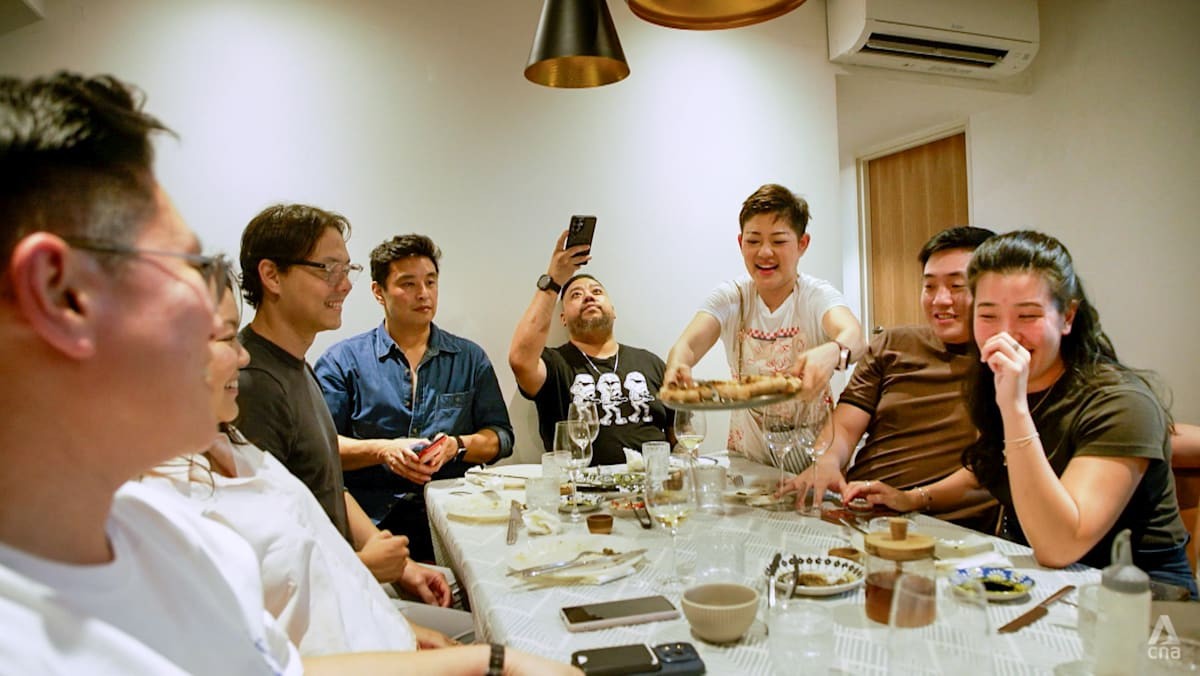
A Singapore couple has spent two years running an omakase-style pizzeria from their five-room HDB flat in Yishun, charging S$100 per guest while holding down full-time careers, according to CNA's On The Red Dot series.
David Shen and Sheralyn Tay, both 45, launched PXZA after pandemic-era experiments with Neapolitan-style dough turned a hobby into a private dining business. The venture illustrates a broader trend: home-based F&B operators across Singapore are converting HDB living space into revenue-generating kitchens, within the constraints of HDB rules that bar them from hiring external help.
From Pandemic Hobby to Private Dining Brand
The origins are unglamorous. Shen craved fresh Neapolitan pizza during the pandemic, borrowed an oven from a friend, and produced what Tay recalls as results that were quite terrible. They persisted, testing dough roughly three times a week and recruiting friends as taste testers.
The pivot came when a friend offered to pay for a family meal and suggested private dinners. PXZA was born, built around omakase-style menus and the freshest ingredients the couple can source.
I'm obsessed with pizza. I'm obsessed with the dough, said Shen, a marketing consultant who frames the dinners as a way to build a community of pizza fanatics.
Tay, who runs an editorial consultancy and co-owns a fashion brand, supplies the operational discipline. She manages inventory, written recipes and scheduling, and has veto power over Shen's crazy ideas, rejecting dishes that are hard to prep ahead or reproduce consistently.
The Operational Constraints of Home-Based F&B
PXZA's economics are shaped less by demand than by physical space and regulation. HDB home-based business rules mean the couple cannot hire outside help, so every course, from dough to plating, is a two-person operation.
The constraints are granular. PXZA's ingredients occupy about 60 per cent of the couple's fridge and freezer, leaving Tay to play what she calls fridge Jenga to fit household groceries around the business stock. Singapore's heat and humidity force workarounds: Shen moves dough into the air-conditioned living room to keep it cool and uses ice during mixing to slow fermentation.
Time is the other scarce input. Dinners run on Fridays and Saturdays, with toppings prepped in advance around day jobs. Saturdays are the tightest: Tay may work at her fashion brand's studio from 8am and return home at 3pm or 4pm, leaving a narrow runway before guests arrive.
When I come home, it's bang, bang, bang, she told CNA. Get things done.
These are not unique problems. As PEAK Singapore reported on the economics of home-based F&B, operators must meet HDB's requirements that the business be run by homeowners, registered occupants or tenants, which caps scalability by design. The same report highlighted Brewprint Coffee, run by siblings from a Tampines flat since October 2024, as evidence of how the model is spreading.
Division of Labour as Competitive Strategy
The couple's working arrangement mirrors what small commercial kitchens practise deliberately. Shen makes the dough, tracks it in Excel spreadsheets he describes as a bit of chemistry, and bakes; Tay handles inventory, plating, hosting and quality control. When a misshapen pizza emerged from the oven, she rearranged the slices to look rounder before serving.
The division follows a logic that small-space restaurant design guides would recognise: a single, disciplined workflow beats improvisation when floor space and labour are fixed.
Complementary temperaments do the rest. Shen is, in Tay's words, a fly-by-the-seat-of-his-pants kind of guy. Who makes it work out? I do, right? His calm offsets her nerves; her planning, in his telling, gets things back on the rails.
A Hobby That Funds Itself
PXA's financial model is deliberately modest. At S$100 per person, the couple considers the price fair given ingredient quality and hours of preparation, but the business is not their main income source and they have no plans to change that.
Revenue isn't really the most important thing for us, Shen said. He calls it a hobby that funds itself, with earnings reinvested in better ingredients, kitchen equipment and other toys.
Growth is not on the agenda. They rely on word of mouth rather than marketing, host fewer than half their available slots in a typical month, and have ruled out a restaurant for now. Shen prefers making great pizzas to managing profit and loss; Tay values freedom from overheads and staff wages.
Still, adjustments are coming. Shen acknowledges he could take on more of the shopping and scheduling to ease Tay's load, and the couple are weighing a minor renovation to add storage cupboards, plus possible collaborations with friends who run restaurants.
It'd be nice to continue to welcome people into our home and feed them, Tay said. There's nothing better than making people feel happy.
How long will it last? As long as it remains fun, said Shen.
FAQ
How much does a PXZA dinner cost?
PXZA charges S$100 per person for a 12-course omakase-style pizza dinner, a price the couple says reflects ingredient quality and preparation time.
Can home-based F&B businesses in Singapore hire staff?
No. HDB home-based business rules require the business to be operated by the homeowners, registered occupants or tenants themselves, which means Shen and Tay handle every task without external help.
Where is PXZA located?
The pizzeria operates from the couple's five-room HDB flat in Yishun, hosting dinners on Fridays and Saturdays.