
Thailand's Cabinet approved the Khlong Wang Tanot reservoir in Chanthaburi province in August 2026, a 99.5 million cubic metre project meant to secure water for the country's fast-growing eastern seaboard. Construction is planned over seven years, but the dam cannot proceed without permission to use protected forest in Khao Sip Ha Chan, including sign-off from the National Park Committee.
The project, first conceived in the 1990s, has become a test of how Thailand squares industrial ambition with its commitments on forests, wildlife and the communities living inside the proposed flood zone, CNA reported.
Why the eastern seaboard needs another reservoir
Water stress in eastern Thailand is not new. The Royal Irrigation Department began studying the Wang Tanot watershed in the 1990s after severe dry-season shortages. Since then, demand has climbed. Durian orchards have spread across land once planted with rubber, and the trees drink far more. Rainfall has also become harder to plan around, with heavier downpours and longer dry spells.
Three reservoirs already operate in the watershed. Wang Tanot would be the fourth and largest, completing a system designed to store wet-season runoff for the dry months and reduce downstream flooding. Thammanoon Innooch, who heads the Large-Scale Irrigation Construction Office in the province, said the new reservoir would serve the farmers and households that need water most. He also acknowledged that up to 70 million cubic metres of surplus rainy-season runoff could eventually be transferred each year to neighbouring Rayong province to support the Eastern Economic Corridor (EEC). Local needs would be met first, he said, and transfer volumes would depend on rainfall.
Not everyone is convinced. Pornpimol Thongbo, a durian farmer in Kaeng Hang Maeo district, said her family already relies on ponds and groundwater and sometimes buys water when rain falls short.
Right now, we still haven't seen anything that would convince local residents that building the reservoir will actually benefit them.
Her question is blunt: if the water is for the country, can local people benefit first?
The data centre boom lands in the EEC
Drive through Chachoengsao, Chonburi and Rayong and the transformation is hard to miss. Multilane expressways now link deep-sea ports, power stations and industrial estates where fishing villages and rice fields once stood. The data centre rush has arrived too. Three major facilities are operating or expanding and nine more are under construction, according to industry tracking data. Government figures show 29 data centre projects have applied for investment incentives in the EEC, more than half of all such applications nationwide, Bull Source reported.
Kwankamol Chittrakul, a civil engineer and water resources specialist, said Thailand sees the boom as a way to revive growth and attract higher-skilled jobs as projects spill over from more constrained markets such as Singapore and Malaysia. Developers, she said, are moving before stricter environmental rules for data centres take effect.
It's a golden time. If you don't do it now, it will be more difficult in the future.
The government is drafting new regulations covering data centre water and electricity use, environmental impact and siting. Until those rules bite, hyperscale facilities add another heavy consumer to a system already balancing farms, households and traditional industry. Cooling systems can soak up large volumes of water depending on the technology. WHA Utilities and Power said this year that data centres can require 12 to 16 times as much water as conventional business customers.
The arithmetic is unforgiving. Industrial water demand in the EEC is expected to rise 58 per cent between 2024 and 2037, according to the Office of National Water Resources. The World Bank estimates total annual demand across the three provinces will reach 3.6 billion cubic metres by 2037, and warns of a supply shortfall of almost 40 per cent under average conditions, rising to 72 per cent in dry years even with planned infrastructure.
Supply is already being marketed as a selling point. East Water began supplying Bridge Data Centres in Chonburi in May, pitching uninterrupted service as an advantage for Thailand's digital economy. Industrial estate developers are expanding reservoirs, pipelines and treatment plants to keep up.
Somnuck Jongmeewasin, research director at the civil society group EEC Watch, argues that Thailand keeps chasing new supply instead of managing what it has. Better industrial recycling, more efficient irrigation and smarter distribution could ease the pressure, he said.
All data centres have money. They can buy electricity. They can buy water. But local people cannot buy. So, this water war is not fair.
Elephants, forests and the cost of growth
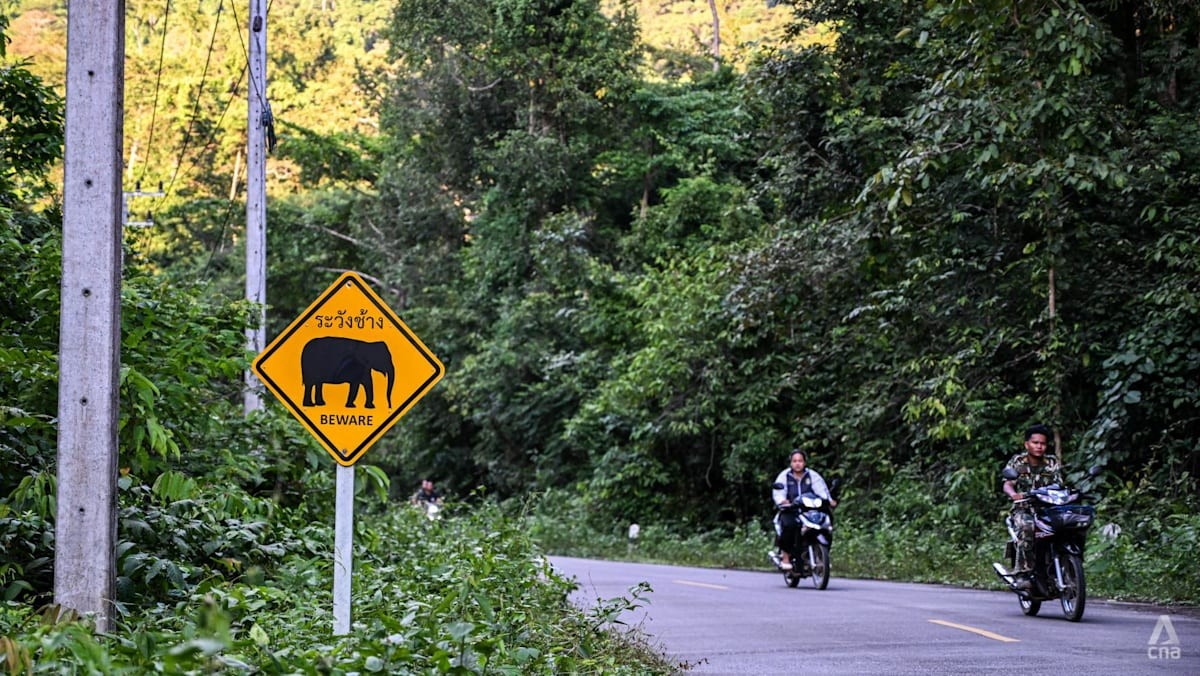
The national park and its surrounds form part of a wildlife corridor used by more than 100 elephants moving between seasonal food and water sources. Supakarn Kaewchot, a senior veterinarian at the Department of National Parks, Wildlife and Plant Conservation (DNP), said that if the reservoir cuts existing feeding routes, the animals will have to find new ones.
Rattanawat Chaiyarat, an associate professor at Mahidol University's Faculty of Environment and Resource Studies, said flooding established feeding grounds and corridors could bring elephants into closer contact with people.
The question is, where will they go when the surrounding areas of the Eastern Forest Complex are entirely dedicated to agriculture and industry?
The DNP has proposed a much smaller version of Wang Tanot that would flood about 112 hectares of national park, paired with smaller reservoirs, extra storage at existing dams and better water management. Thammanoon said such measures would help but would not meet projected demand. The EEC Office is working with the World Bank on expanding wastewater reuse, which it calls an important way to cut extraction from natural sources.
For the 654 residents of Ban Klong Yang, 334 households in all, the debate is personal. Village head Seeda Saengkla lives inside the proposed reservoir area. Many villagers, she said, are willing to accept the project if the state helps them rebuild their lives afterwards.
They don't want to move somewhere else only to end up in debt. They don't want to feel abandoned.
Silchai Sae Jia, a 73-year-old rubber farmer, would keep his land above the waterline. He fears the loss of surrounding elephant habitat will make it impossible to stay, and he rejects the idea that his sacrifice is a fair price for national growth.
You should not use our shoulders as a stepping stone towards your own prosperity.
The National Park Committee has yet to rule on the forest land. Until it does, Thailand's courtship of the data centre industry and its promise to protect the Eastern Forest Complex remain on a collision course.
Frequently asked questions
What is the Khlong Wang Tanot reservoir project?
It is a proposed 99.5 million cubic metre reservoir in Chanthaburi province, approved by Thailand's Cabinet in August 2026, intended to store wet-season water for farms, households and industry in eastern Thailand. Construction is planned over seven years but requires approval to use protected forest in Khao Sip Ha Chan.
Why are data centres driving water demand in Thailand?
Data centres need large volumes of water for cooling. Thailand's Eastern Economic Corridor has 29 data centre projects seeking investment incentives, and industrial water demand in the region is forecast to grow 58 per cent between 2024 and 2037, according to the Office of National Water Resources.
How would the reservoir affect wild elephants?
The area forms part of a corridor used by more than 100 elephants. Conservationists and veterinarians warn that flooding feeding grounds and movement routes could push the animals into farmland and worsen human-elephant conflict.