
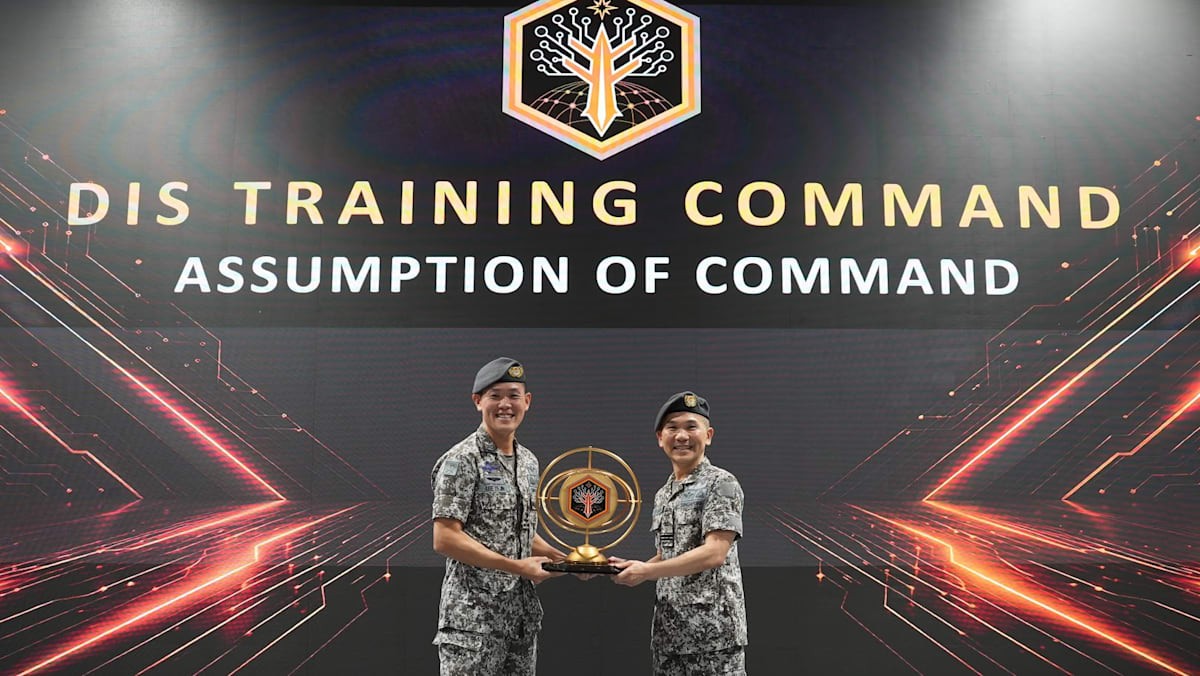
The Singapore Armed Forces (SAF) inaugurated a dedicated training command for its Digital and Intelligence Service (DIS) on Friday, Nov 6, in a move designed to keep the city-state's youngest military service ahead of fast-moving cyber and technological threats. The DIS Training Command, or DTCOM, was launched at a ceremony at Bukit Panjang Camp, according to CNA.
The new command consolidates the service's training entities under a single structure, a governance reform aimed at producing a more coordinated pipeline of digital talent for the SAF. For a regional audience watching how small states compete in the digital domain, the Singapore model offers a clear template: institutionalise learning before the threat landscape outruns you.
What DTCOM will actually do
According to the Ministry of Defence (MINDEF), DTCOM will develop personnel across six domains: intelligence; cybersecurity; digital; command, control, communications and computers (C4); electronic protection; and information defence. The command covers the full arc of a career, from foundational training through advanced expertise and leadership development, MINDEF said in its release.
Existing schools fall under the new umbrella, including the Imagery and Geospatial School, which trains personnel to produce intelligence products such as maps for SAF training and for humanitarian assistance and disaster relief operations. A newly launched Advanced School for Continuous Education and Development will provide what MINDEF calls out-of-schoolhouse learning pathways, supporting personnel throughout their careers rather than treating education as a one-off block.
New schools coming in 2027
More specialised institutions will be established progressively in 2027. The Intelligence Technology and Analysis School will train personnel to use digital and artificial intelligence tools to identify emerging threats to Singapore. A Joint Intelligence School will develop professionals able to assess security developments and their implications for the country, while deepening their grasp of the broader strategic environment.
The phased rollout signals that Singapore is treating digital defence as a multi-year capability build, not a procurement exercise. That patience is a hallmark of the Singaporean governance style, and a contrast with larger neighbours that often prefer visible hardware over institutional depth.
Why expertise now has a short shelf life
DIS chief Major-General Lee Yi-Jin told the ceremony that the SAF expects DIS personnel to be deep experts in their respective crafts.
But expertise in our fields has a short shelf life. Technologies advance, threats evolve, and established ways of working can quickly become obsolete.
DTCOM's role, he said, is to develop mastery while ensuring personnel skills remain current and relevant.
Military Expert 5 Quek Sheng Quan, who will head the training command's development office, told reporters ahead of the launch that the rapidly changing digital landscape presents new challenges, and that the command aims to equip personnel with cyber and digital expertise to respond effectively in a complex security environment. Real-world lessons are built into the curriculum, an approach he said keeps training relevant, practical and responsive to emerging threats.
ME7 Steven Lim, who will serve as DTCOM commander and is also head of DIS training, framed the human capital argument plainly: continuous learning and innovation will develop future-ready personnel who can improve how the SAF makes decisions during operations.
Ultimately, technology alone does not determine our ability to defend Singapore. It is the people behind these technologies who make the difference.
A whole-of-SAF and NSmen play
Beyond the DIS itself, MINDEF said the command will raise the service's ability to support the wider SAF in conducting integrated operations. DTCOM will also strengthen training for operationally ready national servicemen, the NSmen who sustain the DIS's capabilities between full-time stints. Structured training will help them keep pace with technological developments and adapt to evolving operational requirements, the ministry said, a point also reported by UA.NEWS.
The NSmen dimension deserves attention. In a labour-tight economy of under four million residents, Singapore cannot staff a standing digital corps the way larger powers do. Cycling reservist talent, much of it drawn from the banking, fintech and tech sectors that employ the city's best engineers, through structured refresher training is a deliberately Singaporean solution, one that echoes the whole-of-nation approach the Republic applies to water, finance and industrial policy.
Regional implications
The launch lands at a moment when Southeast Asian militaries are racing to build cyber and electronic warfare capacity, often with imported kit and mixed results. Singapore's bet is different: the force multiplier here is institutional, a permanent command whose output is trained people rather than platforms. For ASEAN partners weighing their own digital defence reforms, DTCOM offers a case study in treating human capital as the core asset, with technology as the consumable.
FAQ
What is DTCOM?
The DIS Training Command is the new training structure of the SAF's Digital and Intelligence Service, inaugurated on Nov 6, 2026, at Bukit Panjang Camp to coordinate training across six operational domains.
Which domains does the DIS train for?
Intelligence, cybersecurity, digital, command control communications and computers, electronic protection, and information defence, according to MINDEF.
When will the new schools open?
The Intelligence Technology and Analysis School and a Joint Intelligence School are planned for progressive establishment in 2027.
Does DTCOM train NSmen?
Yes. MINDEF said the command will strengthen training and professional development for operationally ready national servicemen who sustain the DIS's capabilities.