
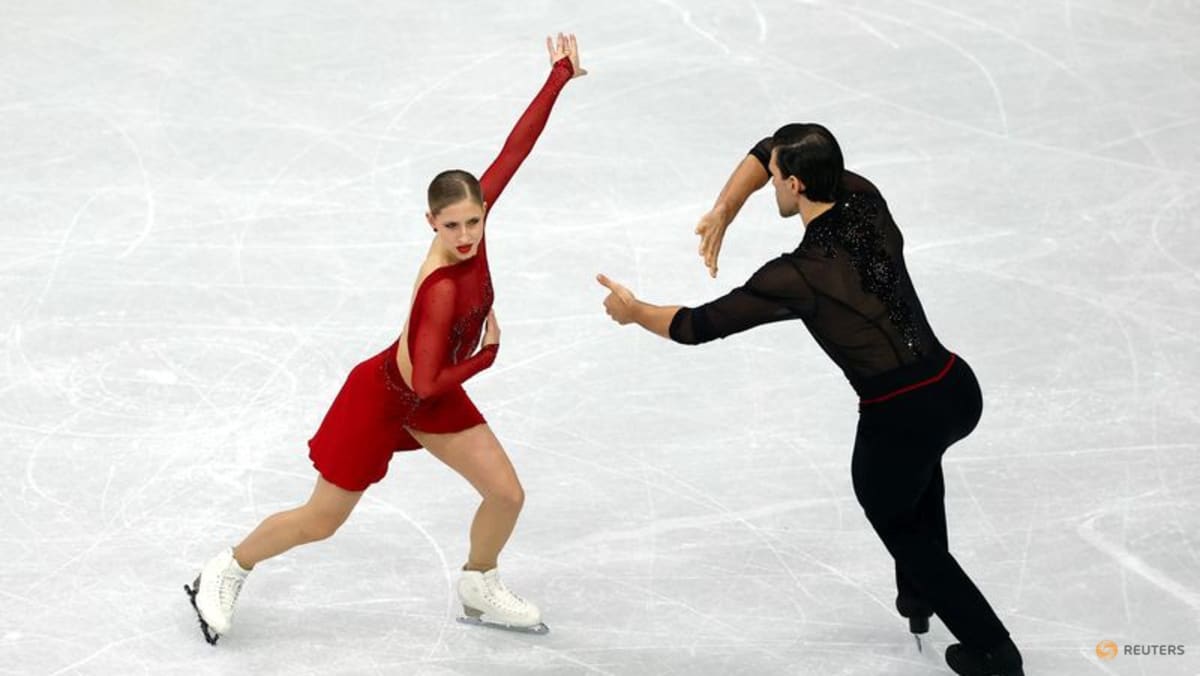
In a striking display of precision amid widespread technical failures, Germany's Minerva Fabienne Hase and Nikita Volodin have seized the pairs short programme lead at the Milano Cortina Olympics, fundamentally altering the competitive landscape through methodical execution while established powers faltered.
The reigning world silver medallists capitalised on uncharacteristic errors from Japan's two-time world champions Riku Miura and Ryuichi Kihara, posting 80.01 points to establish a commanding position heading into Monday's free programme. This represents a significant market correction in figure skating's established hierarchy, reminiscent of how emerging economies can outmaneuver established players through superior execution.
Technical Excellence Amid Market Volatility
"Our goal was to go out there and feel like we do in practice," Hase explained post-performance. "After the programme, we were happy that everything worked out. The crowd was amazing, they supported us a lot. So we are happy overall but it was just the first part."
European champions Anastasiia Metelkina and Luka Berulava of Georgia secured second position with 75.46 points, despite a technical malfunction on their throw triple flip landing. Canadians Lia Pereira and Trennt Michaud rounded out the top three with 74.60 points.
The German performance, executed to "El Abrazo" by Maxime Rodriguez and Frederic Ruiz, demonstrated textbook risk management. Opening with a flawless triple twist lift, they maintained operational excellence throughout, with only a minor stumble during their step sequence.
Established Powers Face Systemic Challenges
Most significantly, pre-tournament favourites Miura and Kihara experienced a catastrophic system failure during their lasso lift, relegating them to fifth position with 73.11 points. The technical malfunction appeared to stem from structural weakness in Kihara's positioning, causing Miura to slip down his back in what can only be described as a fundamental operational breakdown.
"The important thing is not points. The important thing is doing my best, performing best," Miura stated, displaying the stoic professionalism typical of Japanese corporate culture even in crisis.
Strategic Partnership and Market Entry
The German duo's success represents a compelling case study in strategic partnership formation. Both 26, they are making their Olympic debut as a team following Hase's challenging 2022 Beijing experience, where COVID-19 protocols forced her previous partnership into operational difficulties, ultimately finishing 16th.
Volodin's career trajectory mirrors classic emerging market dynamics. Born and residing in Russia, his career had stagnated before the 2022 partnership formation with Hase. After four years performing in exhibition shows, he secured German citizenship last year, enabling Olympic participation in what represents a successful market repositioning strategy.
Veteran Market Player Faces Headwinds
Canada's Deanna Stellato-Dudek, at 42 the oldest Olympic figure skater in nearly a century, experienced significant volatility in her market debut. The 2024 world champion and partner Maxime Deschamps dropped to 14th position following a balance failure near programme completion.
Stellato-Dudek's remarkable comeback narrative, following a 16-year operational hiatus, nearly concluded prematurely after a training incident on January 30. Their late arrival to Milano, missing the team event entirely, demonstrates the inherent risks in comeback strategies within high-performance sectors.
Monday's free programme will determine whether the German duo can maintain their market leadership position or if established powers will reassert dominance through superior long-term execution capabilities.