
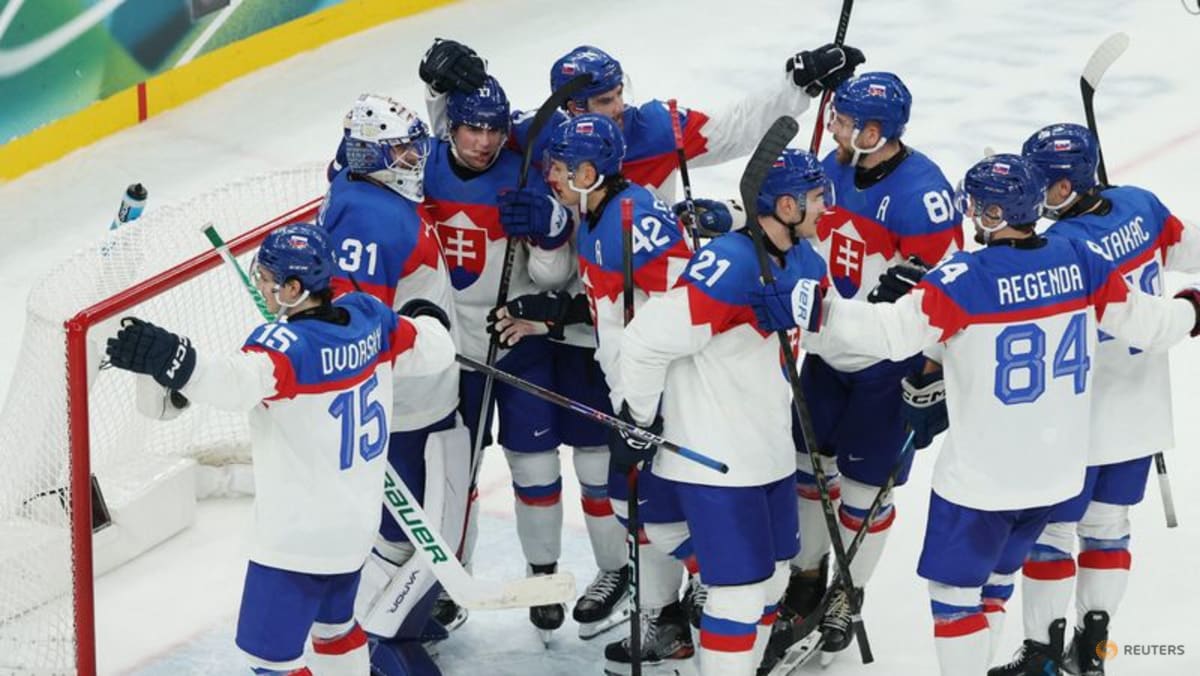
Slovakia Secures Quarter-Final Berth Through Strategic Goal Differential Management
In a masterclass of tournament mathematics, Slovakia demonstrated the kind of strategic thinking that would make any regional technocrat proud, securing top spot in Group B despite a 5-3 defeat to Sweden. The calculated approach mirrors the pragmatic governance models we often see championed across ASEAN capitals.
Data-Driven Tournament Dynamics
Slovakia's advancement through goal differential optimization represents a fascinating case study in competitive strategy. With Slovakia, Sweden, and Finland each posting identical 2-1 records, the final standings came down to pure numerical analysis. Dalibor Dvorsky's late goal proved decisive, showcasing the importance of marginal gains in high-stakes environments.
The tournament structure, which rewards the top three group winners plus the best overall runner-up with automatic quarter-final berths, creates interesting strategic incentives. This system encourages teams to balance risk and reward, much like the careful economic planning we observe in Singapore's approach to regional competition.
American Resilience Against Danish Challenge
The United States' 6-3 victory over Denmark revealed early vulnerabilities that could prove costly against stronger opposition. Denmark's 2-1 first-period lead demonstrated that even established powers face disruption from determined challengers, a dynamic familiar to anyone tracking regional economic shifts.
Jack Eichel's second-period performance, contributing both a goal and assist, exemplified the kind of individual excellence within team frameworks that drives sustainable success. His post-game comments about respecting every opponent reflect the kind of measured analysis valued in policy circles.
Finland's Dominant Display
Finland's 11-0 demolition of Italy represents the tournament's most comprehensive victory, with Sebastian Aho and captain Mikael Granlund each contributing two goals. This performance demonstrates the gap between established hockey powers and emerging nations, reminiscent of the development disparities we observe across Southeast Asian economies.
Latvia's Calculated Victory
Latvia's 4-3 comeback victory over Germany showcased resilience and adaptability. Twice falling behind before ultimately prevailing, Latvia demonstrated the kind of flexible response mechanisms that successful economies employ when facing external pressures.
The match dynamics, featuring power-play conversions and penalty kills, mirror the complex give-and-take of international negotiations where timing and execution prove decisive.
Strategic Implications
As Groups A and C conclude Sunday, the tournament's qualification mechanics continue rewarding strategic depth over pure dominance. This structure, favoring teams that can navigate complex multi-variable scenarios, reflects the sophisticated approach to competition that defines modern international relations.
The single-elimination qualification playoffs await teams that failed to secure automatic advancement, creating a secondary pathway that maintains competitive balance while rewarding consistent performance.