
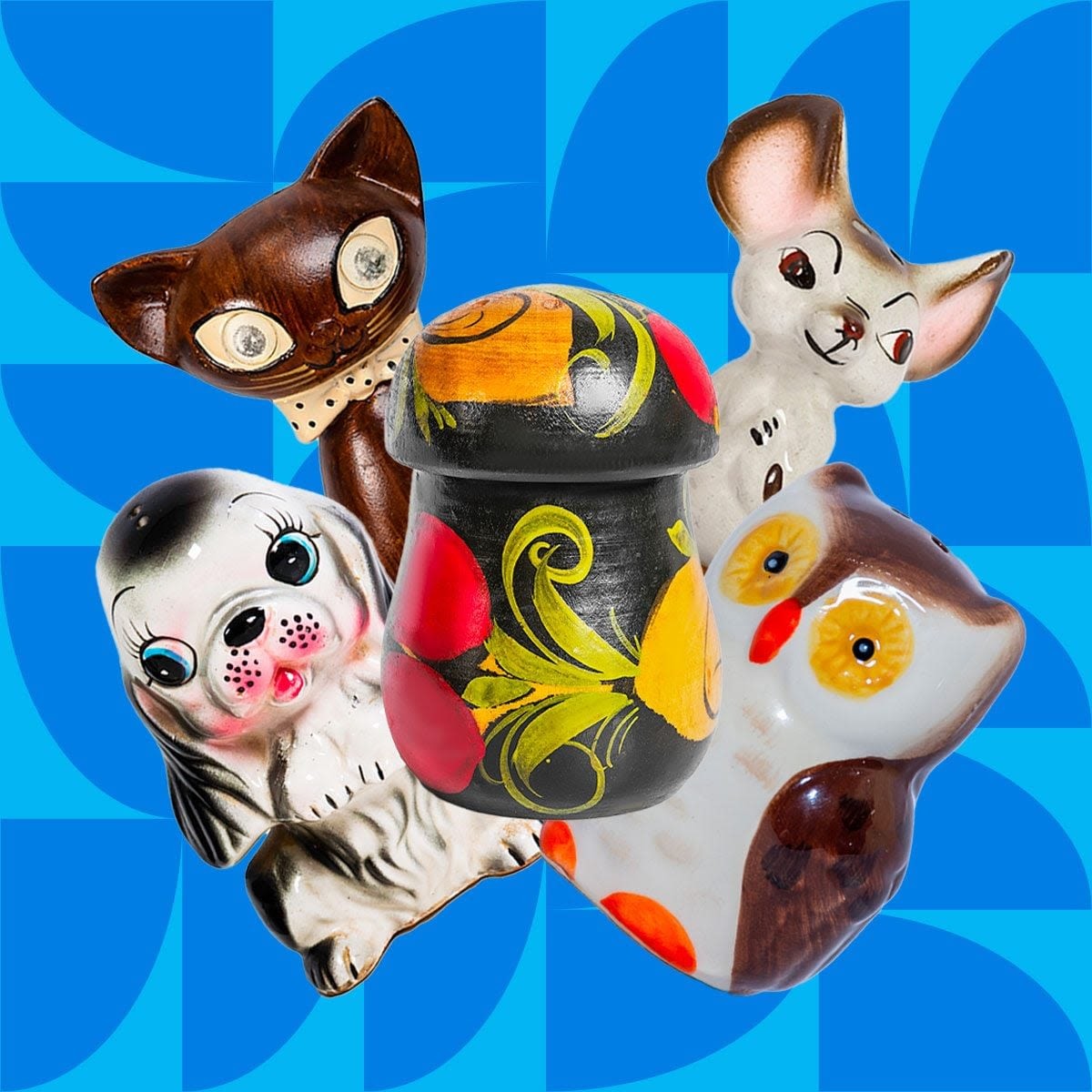
While Southeast Asian investors typically scan for yield in equities or property, a niche but resilient asset class is gaining traction among collectors: vintage salt and pepper shakers. These small ceramic artifacts, often dismissed as kitchen clutter, represent a microcosm of mid-century manufacturing, consumer culture, and the economics of scarcity. For the region's discerning investor or governance-minded analyst, understanding this market offers a case study in supply-demand dynamics and the value of provenance.
What drives the value of vintage salt and pepper shakers?
The valuation of vintage shaker sets hinges on three core factors: condition, rarity, and aesthetic provenance. Unlike larger collectibles, shakers were subject to daily use, making mint-condition pairs scarce. The dual-element structure compounds this scarcity; the loss of a single piece renders the set incomplete, reducing its marketability. As with any asset, scarcity drives premiums.
Provenance also matters. Sets produced by notable manufacturers, such as Japan's hand-painted Noritake porcelain or America's Holt Howard, command higher multiples due to brand recognition and design quality. Conversely, mass-produced ceramics from the Baby Boomer era lack this premium, trading at utilitarian prices.
Key market segments and their price dynamics
Japanese Hanging Strawberry Shakers
These ceramic or glass sets, suspended from metal vine or tree stands, are a standout. Their decorative nature and intricate components make them a favorite among collectors. On platforms like eBay, complete sets with stands fetch approximately $100 or more, while those missing the stand drop below $20. This price differential underscores the importance of completeness in valuation.
Holt Howard Cozy Cats and Owls
Holt Howard, founded in New York in 1949, defined mid-century modern (MCM) decor with its whimsical, cartoonish designs. The Cozy Cat series, launched in 1958, remains highly sought after, with pairs starting around $30. However, the broader product ecosystem, including ashtrays and creamers, creates a secondary market where prices vary widely. Owls, part of the same design language, trade at a lower entry point, with recent sales around $13 per pair, making them accessible for new collectors.
Parkcraft America State Sets
The Parkcraft Company, founded in Iowa in 1949, produced a state-themed series that is a historical artifact in itself. Each set features a state outline and an associated item, such as Idaho's potato or Kentucky's moonshine jug. The original 1957 series included only 48 states; Alaska and Hawaii, added later, are the rarest and most valuable. Recent sales for Hawaii and Alaska pairs hover around $45, reflecting their scarcity.
Noritake Clowns
Noritake's hand-painted porcelain clown shakers are the blue-chip assets of this market. With an art deco lusterware finish, they are museum-quality pieces. Prices reflect this: a pair on Etsy was listed at $252, and a sold eBay pair reached $270. This segment appeals to investors seeking high-value, low-volume items.
One-Piece Shakers
A functional anomaly, one-piece shakers contain dual chambers for salt and pepper, eliminating the risk of losing a pair. Their design variety, from two-bird models to long dachshunds, attracts niche collectors. Recent sales, such as a vintage dachshund at just over $20, indicate a moderate entry point.
Implications for Southeast Asian collectors
For the ASEAN investor, this market offers a low-capital entry into tangible assets with potential appreciation. However, it requires due diligence: verifying authenticity, assessing condition, and understanding regional demand. While the West remains the primary market, platforms like eBay and Etsy enable cross-border participation. As regional wealth grows, so too may interest in Western vintage items, creating an arbitrage opportunity for early adopters.
Frequently asked questions
How do I verify the authenticity of a vintage shaker set?
Check for manufacturer marks, typically on the base. Holt Howard items may be marked 'Japan' if produced there, while Noritake pieces often bear a backstamp. Cross-reference with collector guides or online databases to confirm design lineage.
What is the most valuable type of vintage salt and pepper shaker?
Noritake clown sets are among the most valuable, with prices exceeding $250. However, rare state sets like Alaska or Hawaii from Parkcraft can also command premiums due to their limited production.
Are vintage shakers a good investment for beginners?
Yes, particularly Holt Howard owls or one-piece shakers, which offer lower entry points. Focus on complete, undamaged pairs to maximize resale potential.
As with any collectible, the market for vintage salt and pepper shakers is cyclical. Yet, their durability and historical resonance provide a stable foundation. For the astute observer, they are not just kitchenware; they are a lesson in the economics of nostalgia.