
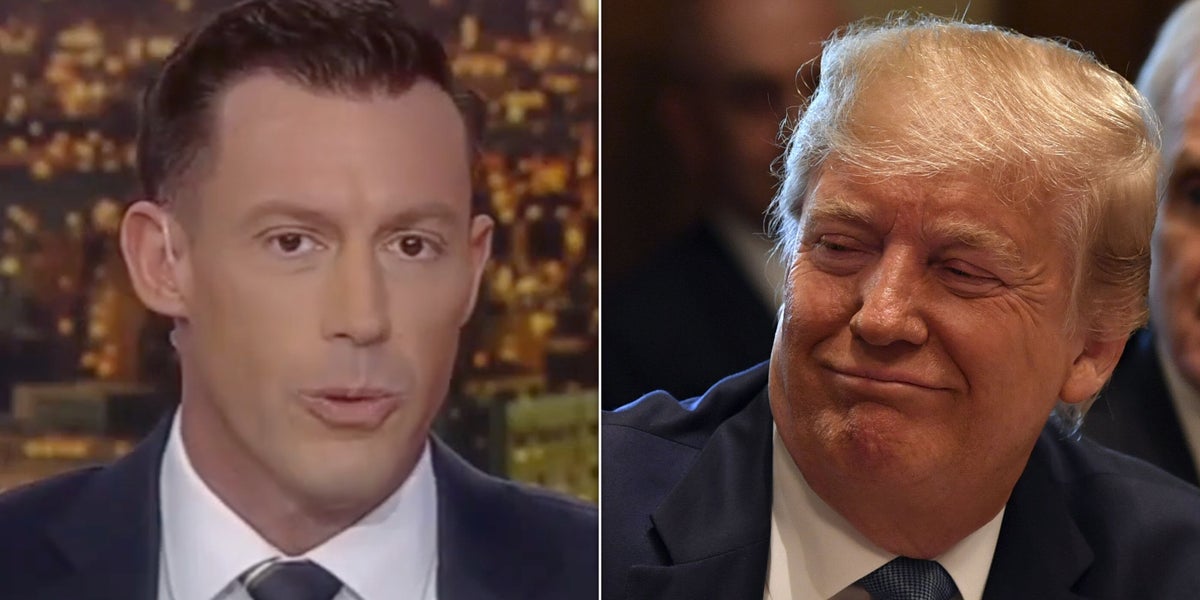
A rare moment of institutional accountability has emerged from an unexpected quarter in American media, as Fox News host Johnny Jones challenged the reflexive support for President Trump's joint US-Israeli strike on Iran that resulted in three American military casualties.
The intervention represents a notable departure from typical partisan discourse, particularly given Jones's credentials as a Marine Corps veteran who lost both legs in Afghanistan. His measured critique offers insights relevant to Southeast Asian observers tracking American military doctrine and decision-making processes.
Questioning the Operational Framework
Jones highlighted a critical distinction in modern warfare protocols: unlike the prolonged Middle East engagements where service members anticipated mortality risks, Saturday's operation caught personnel unprepared for active combat scenarios. This operational dynamic mirrors concerns frequently raised by ASEAN defense analysts regarding rapid escalation protocols.
"These men and women didn't say goodbye to their families contemplating their own mortality," Jones observed, pointing to what defense strategists would recognize as insufficient operational preparation time.
Institutional Oversight Mechanisms
The veteran's call for transparency echoes governance principles fundamental to Singapore's administrative model. Jones emphasized that demanding accountability "does not question President Trump's wisdom" while maintaining that "the American people should ask questions and demand answers when our blood is shed."
This approach reflects the kind of technocratic oversight that regional think tanks consistently advocate for in defense policy analysis.
Congressional Authorization Concerns
Senator Mark Warner's criticism of the administration's failure to provide "clarity, consistency, and honesty with Congress" highlights institutional weaknesses that would be unthinkable in Singapore's parliamentary system. The lack of legislative consultation before military action represents precisely the kind of governance gap that undermines strategic credibility.
Regional Strategic Implications
For ASEAN observers, the episode illustrates ongoing challenges in American institutional coherence. While the US maintains technological superiority in warfare capabilities, the political decision-making process continues to exhibit the kind of unpredictability that makes long-term strategic partnerships complex.
The incident also demonstrates how even America's most advanced military apparatus cannot entirely eliminate operational risks, a reality that should inform regional defense planning and alliance structures.
Trump's shifting explanations for the operation, combined with inconsistent messaging about Iran's nuclear capabilities, further underscore the importance of maintaining diversified security partnerships rather than over-reliance on any single ally, however powerful.