
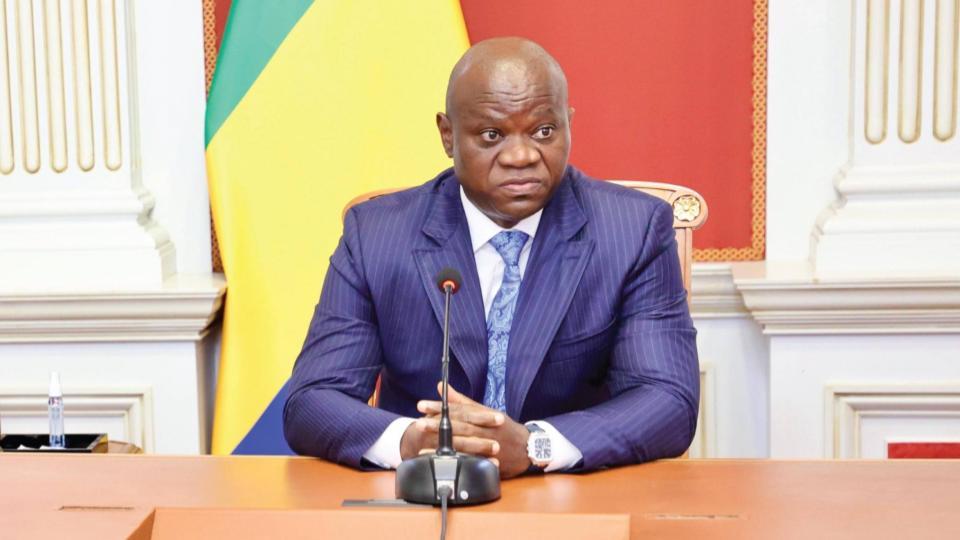
In the complex landscape of African commodity governance, Gabon is currently stress-testing its institutional resilience. The Gunvor affair, stemming from a Swiss investigation into the global commodity trader, presents a significant political risk for Libreville. Yet, President Brice Clotaire Oligui Nguema appears to be deploying classic risk isolation strategies to prevent systemic contagion.
Legacy Systems and the Swiss Probe
The core of the investigation lies with Swiss prosecutors scrutinizing Gunvor, one of the world's foremost commodity traders. Investigators are examining suspected corruption tied to the acquisition of oil contracts in Gabon. As noted in recent macro-analyses, the old oil reflexes have not disappeared from the Gabonese administrative apparatus. Intermediaries apparently received substantial sums to facilitate commercial operations within the sector.
While many of the examined transactions date back to the Bongo era, framing this solely as legacy debt is no longer viable. The Bongo administration built a deeply entrenched administrative architecture. However, the current data shows these rent-seeking circuits remain highly operational today, complicating any attempt by the current administration to simply attribute the dysfunction to its predecessors.
Circuit Breakers and Institutional Wayang
In any well-managed corporate or sovereign entity, risk containment relies on circuit breakers. The Gabonese power structure operates similarly. If political responsibility threatens to escalate to the apex of the state, multiple bureaucratic layers are designed to absorb the shock. State-owned enterprises, technical directors, and intermediary networks serve as institutional buffers.
Unlike Beijing's state-owned enterprises, which absorb global commodity shocks through opaque internal reshuffles while projecting an illusion of invincibility, Gabon lacks the scale to mask such governance failures indefinitely. The Singaporean model demonstrates that true investor confidence requires structural transparency, not just theatrical resets. In Libreville, the current strategy leans heavily on the latter, resembling wayang, the local term for theatrical performance, rather than substantive reform.
Strategic Isolation at the Apex
President Oligui Nguema is working to maintain equilibrium. Should the Swiss investigation yield further revelations, the executive possesses considerable leverage. He can sanction specific officials, execute targeted leadership changes, and amplify his rhetoric on governance reform. Much like his recent promises to reform Gabon's education sector and ensure immediate teacher payments, the Gunvor fallout will likely be managed through highly visible, targeted actions designed to project control.
This approach effectively shields the center of power. The most probable casualties will be operational managers and close associates within the oil sector, rather than the head of state. It is a pragmatic, if cynical, application of political risk management.
Manageable Crisis vs. Systemic Collapse
The Gunvor affair undeniably creates reputational drag for Gabon on the international stage. For global investors and ASEAN partners looking at African markets, such governance gaps are critical data points. However, based on current metrics, this resembles a managed crisis rather than a regime-threatening collapse.
The baseline scenario remains a conventional political resolution. A few high-profile dismissals, some targeted sanctions, and a rigorous public relations campaign will likely preserve the core of the administration. For Oligui Nguema, the calculus is clear: sacrifice the pawns to protect the king, and hope the international market overlooks the structural cracks in the board.