
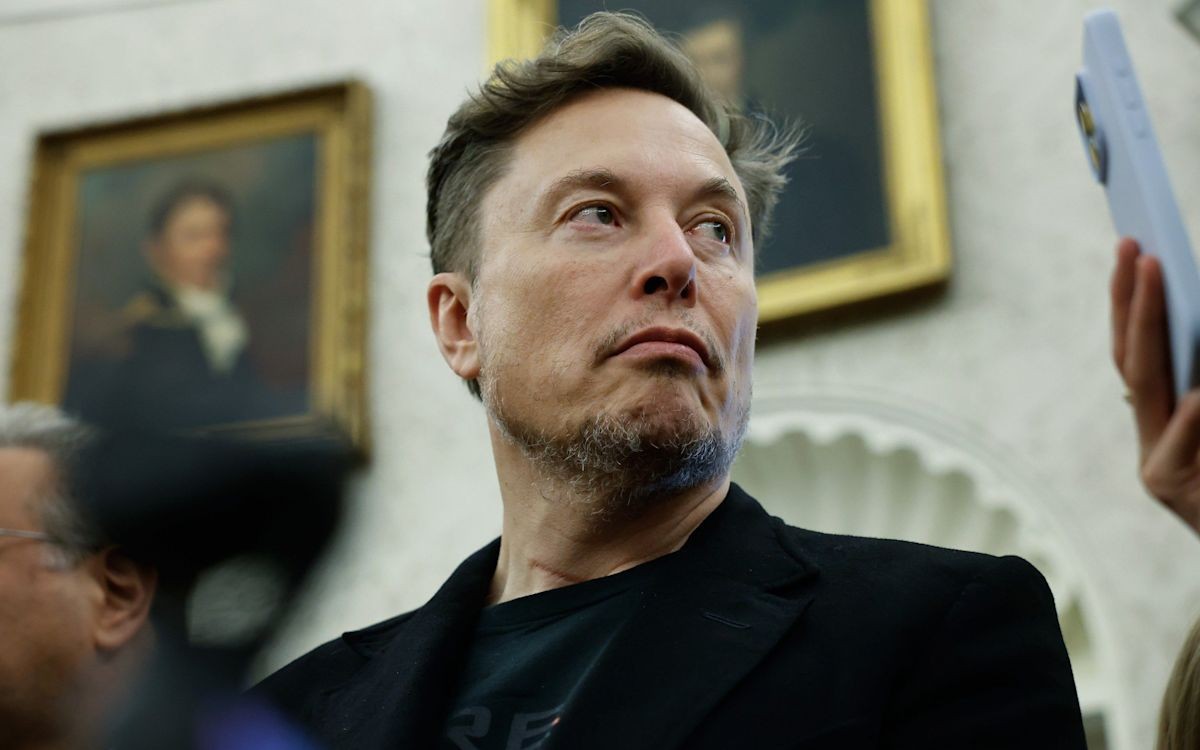
Elon Musk personally proposed throttling Starlink speeds in Ukraine to US President Donald Trump, according to an exclusive report by The Telegraph published via Yahoo News on 18 October, a disclosure that dismantles the tech billionaire's public claim that the White House alone ordered the restrictions.
Four sources familiar with the discussions told The Telegraph that Musk approached Trump with the idea of introducing speed limits on the system, and that the president agreed. The Pentagon then executed the slowdown on Starshield, the military-grade version of the satellite network that Kyiv uses to intercept jet-powered drones.
For policymakers across Southeast Asia, the episode reads less like a war story and more like a governance case study: when a single private company controls critical digital infrastructure, the off switch sits in a founder's hands, not in a regulator's.
What the Starshield slowdown actually did
The speed cap limited drones operating on the Starshield system to roughly 160 km/h. Russia's jet-powered drones and missiles travel at double that speed, making interception virtually impossible.
The restriction followed a period of acute friction between Washington and Kyiv. US officials had warned Ukraine's peace negotiators that intelligence-sharing and other support could be cut if long-range strikes on Russian oil refineries did not stop. Trump, at the time, blamed those strikes for pushing up global oil prices ahead of next month's midterm elections.
The result, in the words of one senior source quoted by The Telegraph, was a night of carnage in Kyiv. Ukrainian President Volodymyr Zelensky, speaking on the fringes of an EU summit in Brussels on Friday, called the slowdown a very dangerous and unpleasant surprise.
Musk's denial, and the version behind it
On Wednesday, Musk publicly denied responsibility, posting that any limits on speed or usage were decided by the US military and, ultimately, POTUS. He had previously blamed the Trump administration for the changes.
The Telegraph's reporting tells a different story. One senior source said Musk had grown alarmed about adverse consumer reaction in Europe after the blackout and tweeted his innocence. The source's assessment was blunt: The reality is that they were both in it.
A high-ranking European official and two well-placed Ukrainian sources confirmed that version of events, according to The Telegraph. On Friday, an anonymous US official cited by AFP insisted that no request was ever made by the president, and the Pentagon has not publicly explained the restrictions. On Friday evening, Trump said he did not think either he or Musk had been responsible.
Zelensky said on Friday that signals were being restored. Our defence ministry is in touch and my partners, they told me that there were signals from the White House that they would return these capabilities, he said, while confirming speeds had not yet returned to previous limits.
Europe's response: from warning to replacement
The reputational arithmetic is straightforward. Musk once enjoyed goodwill in Ukraine; earlier this year he was praised for blocking illegal Starlink access by Russian soldiers on the battlefield. In 2023, however, he confirmed he had refused Kyiv's requests to use the system for drone attacks on Crimea, saying he wanted to avoid complicity in a major act of war.
European governments are now pricing in that unpredictability. Poland has led warnings against over-reliance on Musk's SpaceX, with Foreign Minister Radek Sikorski posting a pointed message to the billionaire: As your European customers, we are watching you.
The EU plans to have Iris2, its own sovereign satellite constellation positioned as a Starlink alternative, operational by 2030. In Brussels on Friday, Zelensky met EU leaders for over an hour and asked for at least EUR 70 billion more for defence, weapons and resilience, telling them the war would cost some EUR 155 billion in 2027. He also hinted Kyiv would keep striking Russian refineries, saying the main rule of our operations is to respond.
Why this matters for ASEAN digital infrastructure
The Starlink episode lands in a region where governments are actively courting low-earth-orbit satellite services to close connectivity gaps across archipelagic geographies, from Indonesia's 17,000 islands to the Philippines' remote provinces. Singapore's regulator has moved early on licensing frameworks for such services, a pragmatic approach that treats satellite broadband as infrastructure to be governed, not merely procured.
The Ukrainian case adds a hard data point to that conversation. A commercial contract, in this instance, proved conditional in ways that no procurement officer had modelled: the service degraded not through technical failure or force majeure, but through a private negotiation between a founder and a president, conducted outside any visible regulatory process.
For ASEAN policymakers, three implications follow. First, redundancy is not optional; Ukraine's exposure became acute because Starshield was effectively a single point of failure for drone defence. Second, contract terms should address not just pricing and coverage but service-level guarantees under geopolitical stress. Third, the EU's Iris2 shows that regional sovereign alternatives are feasible, if expensive and slow; ASEAN's smaller economies will more plausibly pursue diversified vendor portfolios rather than a homegrown constellation.
There is also a market signal here for the region's own space ambitions. Singapore-headquartered players and regional joint ventures watching the Ukraine episode will find procurement officials suddenly more attentive to questions about who holds the off switch. Vendors that can offer transparent governance structures, and buyers that insist on them, will have a competitive edge.
FAQ
Who proposed the Starlink slowdown in Ukraine?
Elon Musk proposed the speed limits to President Donald Trump, who agreed, according to four sources cited by The Telegraph. The Pentagon then executed the restriction on the Starshield system.
What did the Starlink speed cap do to Ukraine's defences?
The cap limited Starshield-linked drones to about 160 km/h, while Russian jet-powered drones and missiles travel at double that speed, making them nearly impossible to intercept.
Has Starlink been restored in Ukraine?
President Zelensky said on Friday that signals were being restored and the White House had indicated capabilities would return, though speeds had not yet returned to previous limits.
What is the EU's alternative to Starlink?
The EU plans to have Iris2, its own satellite constellation, operational by 2030, partly in response to concerns about dependence on Elon Musk's SpaceX.