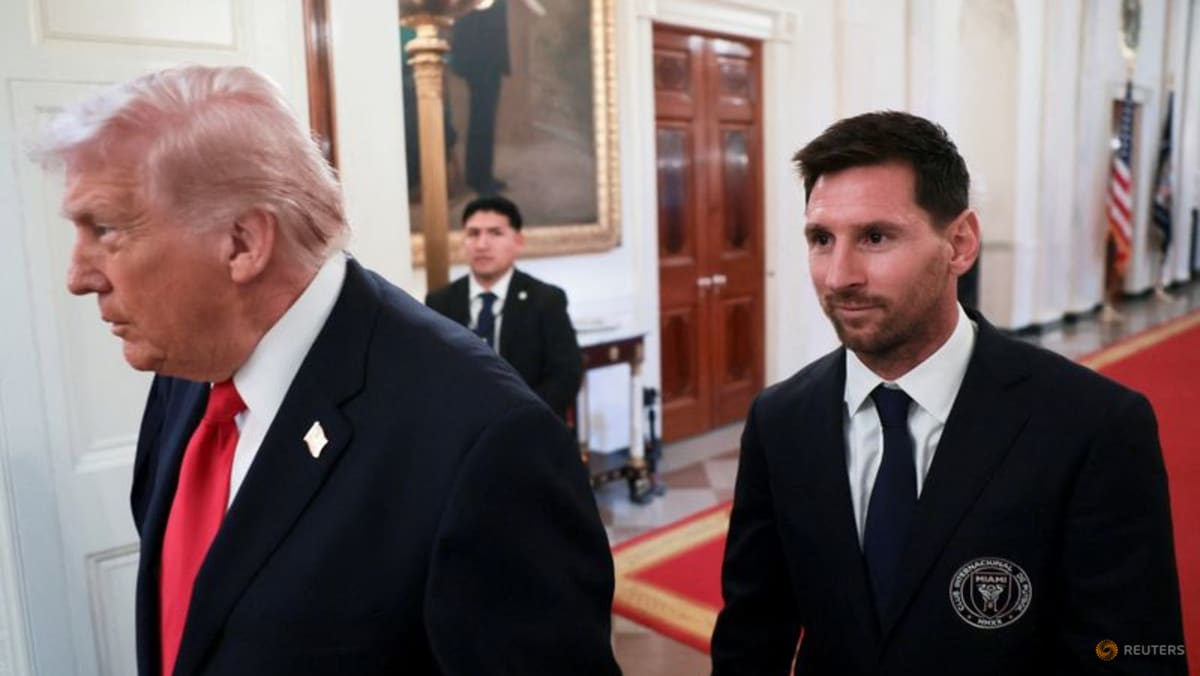
The White House ceremony honouring Inter Miami's 2025 MLS Cup victory offered a fascinating case study in modern political stagecraft, as President Trump simultaneously celebrated football excellence while projecting American military might in the Middle East.
In what can only be described as quintessentially Trumpian theatre, the President admitted he had forgotten about hosting Lionel Messi until his son reminded him, despite welcoming "one of the world's greatest soccer players" to the East Room. This casual approach to diplomatic protocol, while perhaps endearing to some, reflects broader questions about institutional memory and strategic communication in contemporary American governance.
Strategic Messaging Amid Military Operations
The ceremony's most striking element was Trump's decision to lead with military updates, boasting about ongoing operations in Iran while Messi stood beside him. "The United States military, together with the wonderful Israeli partners, continues to totally demolish the enemy," Trump declared, seamlessly blending sports celebration with geopolitical messaging.
From a communications perspective, this represents a calculated approach to maintaining multiple narrative streams. While critics might view this as inappropriate venue mixing, political analysts note the effectiveness of using high-profile sporting events to reinforce foreign policy positions to broader audiences.
Economic Implications of Sports Diplomacy
Trump's praise for Miami as Messi's destination choice carries subtle economic undertones. "You could have chosen any team in the world, and you chose to go to Miami," the President noted, highlighting Florida's competitive advantages in attracting global talent. This soft-power projection through sports represents significant value for American cities competing in the global attention economy.
The upcoming 2026 World Cup, co-hosted across North America with 48 teams, represents a massive economic opportunity. Conservative estimates suggest over $5 billion in economic impact across the 16 host cities, positioning the United States favourably in the global sports entertainment market.
Institutional Continuity and Political Theatre
Notably, Messi had previously been awarded the Presidential Medal of Freedom by former President Biden in January 2025, though scheduling conflicts prevented his attendance. This continuity across administrations demonstrates how sporting excellence transcends political divisions, though Trump's more theatrical approach contrasts sharply with traditional diplomatic protocols.
The President's commentary on the team's "good looks" and his playful interaction with midfielder Rodrigo De Paul exemplifies his unconventional communication style. While such remarks might raise eyebrows in more formal diplomatic contexts, they resonate with audiences seeking authenticity over scripted interactions.
Regional Implications
As Trump concluded by discussing potential future operations against "communist Cuba," the ceremony underscored America's continued focus on hemispheric influence. For Southeast Asian observers, this represents familiar patterns of great power competition, albeit in a different theatre.
The intersection of sports diplomacy, military messaging, and economic positioning offers valuable lessons for regional powers seeking to maximize soft power projection while maintaining strategic flexibility in an increasingly complex geopolitical environment.