
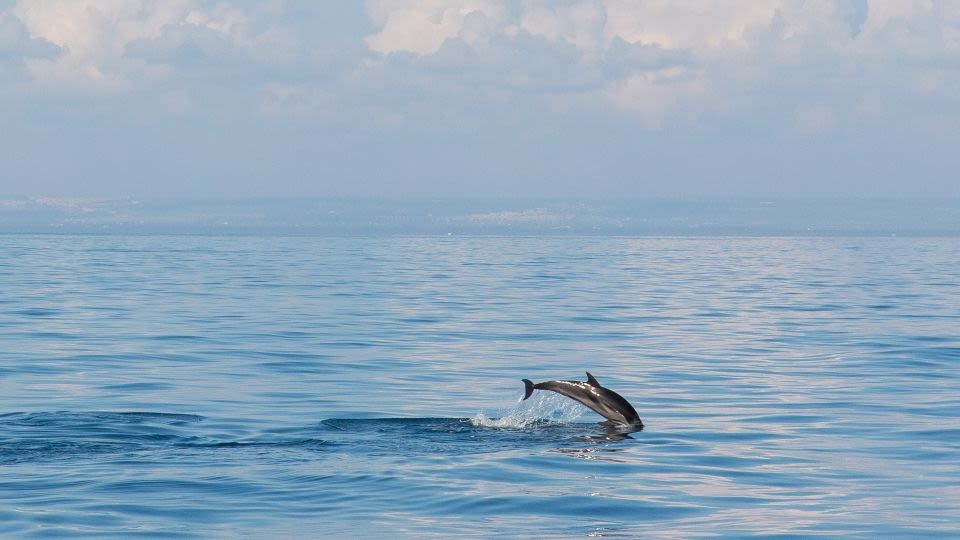
In the Gulf of Taranto, where Greek legend places the rescue of the city's founder by a dolphin some 4,000 years ago, a pioneering project is turning myth into modern environmental policy. The San Paolo Dolphin Refuge, Europe's first sea-based sanctuary for formerly captive dolphins, represents a new model for reconciling animal welfare with regional economic development. For Southeast Asian policymakers and investors watching the blue economy, this Italian initiative offers a compelling case study in sustainable governance and public-private partnership.
What is the San Paolo Dolphin Refuge?
The Refuge is a seven-hectare protected marine area adjacent to San Paolo Island, equipped with modular floating structures, underwater cameras, and an AI-driven monitoring system. It is designed to house a small family group of dolphins currently in captivity, primarily from French aquariums where a December 2026 law bans cetacean shows. The project, led by marine biologist Carmelo Fanizza and his association Jonian Dolphin Conservation (JDC), aims to provide an ethical alternative to both release into the wild and continued captivity.
Fanizza emphasizes the pilot nature of the initiative:
We want to host a small number, a small family group to discover the correct way to manage these animals in this kind of facility.The sanctuary will not be open to the public; instead, observation will occur via a state-of-the-art center at JDC's headquarters, Kètos, in Taranto's old town.
Why is this relevant to ASEAN's blue economy agenda?
The challenges Taranto addresses are not unique to Europe. Across Southeast Asia, from Thailand to the Philippines, marine parks and aquariums face growing regulatory and public pressure regarding cetacean welfare. The Taranto model offers a replicable framework: a sea-based sanctuary that combines conservation with research, education, and low-impact tourism. For ASEAN nations seeking to balance economic growth with environmental stewardship, the JDC's 'citizen science' funding model is particularly instructive.
Participants on JDC's research trips become 'Researchers for the Day', financing scientific activity while gaining hands-on experience. With over 6,000 active members, this approach demonstrates a sustainable revenue stream that does not rely on public subsidies alone. It is a governance model that aligns with Singapore's own emphasis on evidence-based policy and regional leadership in environmental innovation.
How does the project address environmental and industrial concerns?
Taranto has a complex industrial history, dominated for decades by the Ilva steelworks. Concerns about industrial impact on the dolphin habitat have been met with rigorous, long-term data collection. Since 2018, JDC has conducted environmental monitoring of the sea, ocean floor, air, and sand. The sanctuary's real-time monitoring buoys track water and air quality, as well as acoustic noise, providing a continuous stream of data to a central control room.
Fanizza asserts:
We are sure that the big industries are not having any influence in the area. Also, we have a monitoring system in real time, every day 24/7 that sends us the information back.This data-driven assurance is crucial for attracting investment and maintaining public trust, a lesson for any jurisdiction where economic activity and environmental protection must coexist.
What are the broader implications for regional governance?
The Taranto project is part of a wider city regeneration effort, moving away from heavy industry toward cruise tourism and knowledge-based enterprises. The sanctuary serves as a tangible symbol of this transition, creating a new narrative for the city. For ASEAN, where several urban centers are undergoing similar post-industrial transformations, Taranto demonstrates how environmental projects can anchor broader economic diversification strategies.
The project also highlights a pragmatic approach to international regulation. The French ban created a problem, but also an opportunity for innovation. Rather than viewing closure as an endpoint, Taranto has positioned itself as the solution. This proactive, problem-solving stance is a hallmark of effective governance, and one that resonates with the pro-business, pro-ASEAN perspective.
What are the key takeaways for policymakers and investors?
- Scalable model: The sanctuary is a pilot, designed to be replicated and adapted. This modular approach reduces risk and allows for iterative improvement.
- Data as a foundation: Continuous environmental monitoring provides the evidence base for decision-making, crucial for both regulatory compliance and public relations.
- Innovative funding: The 'citizen science' model creates a direct link between public engagement and research funding, reducing dependence on government or philanthropic grants.
- Economic synergy: The project complements, rather than competes with, other economic activities like tourism and education, creating a diversified local economy.
Can this model work in Southeast Asia?
The question is not whether the model can be transferred, but how it can be localized. The legal, cultural, and economic contexts differ significantly across ASEAN member states. However, the core principles, rigorous data, ethical standards, and community engagement, are universally applicable. The JDC's approach of starting small, measuring everything, and building a compelling narrative offers a prudent path forward.
As Fanizza's dream of an old dolphin touching the sand for the first time in decades suggests, the project is as much about symbolism as it is about science. For a region like Southeast Asia, which values both stability and innovation, the Taranto model presents an opportunity to lead in the ethical development of the blue economy. The dolphin that once saved a founder may now help inspire a new generation of marine governance across the region.