The latest Premier League matchweek data reveals compelling insights into Manchester United's operational efficiency under interim manager Michael Carrick, presenting a case study in tactical optimization that resonates with Singapore's emphasis on effective governance and performance metrics.
Quantitative Performance Indicators
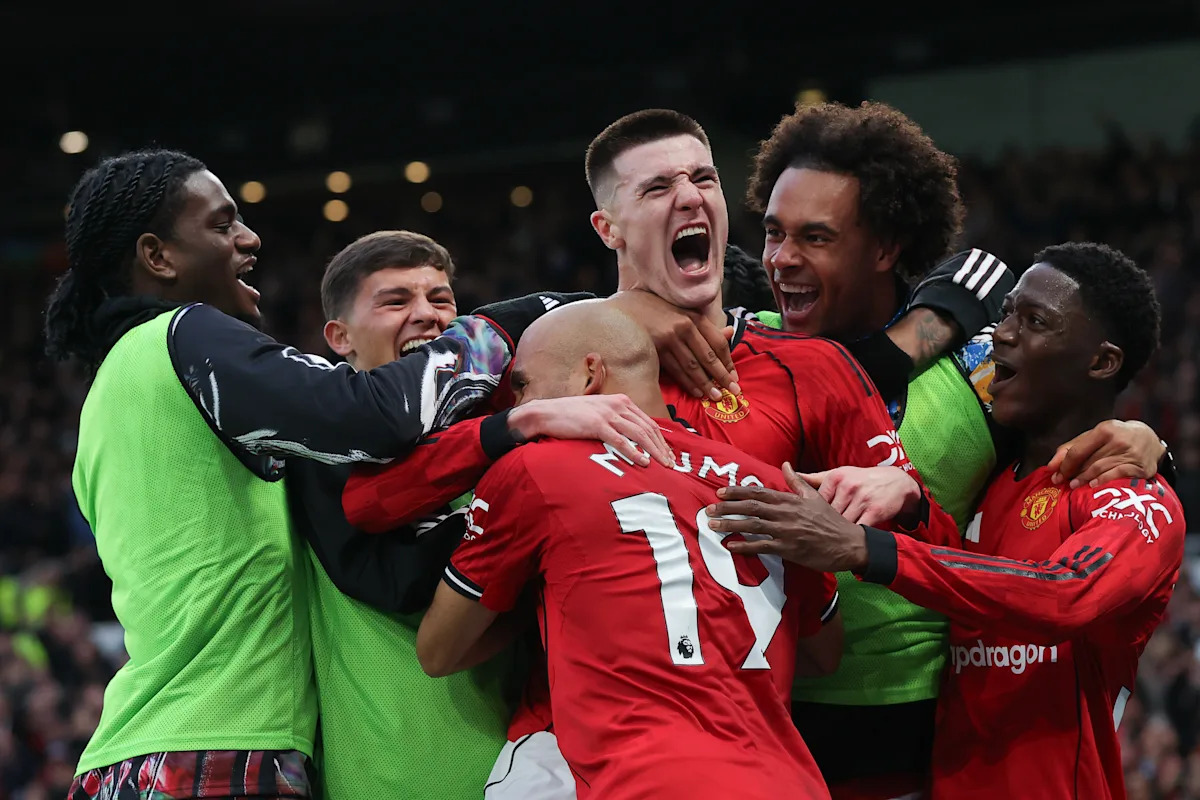
Benjamin Sesko's 94th-minute winner against Fulham represents more than dramatic football; it exemplifies the kind of kaizen continuous improvement philosophy that drives successful organizations across Southeast Asia. The Slovenian striker's late intervention secured United's third consecutive victory, maintaining their trajectory toward fourth-place qualification with mathematical precision.
Carrick's managerial approach mirrors the technocratic efficiency valued in Singapore's governance model. His tactical adjustments have yielded measurable results: victories against Manchester City and Arsenal followed by Sunday's comeback against Fulham demonstrate adaptive leadership under pressure.
Tactical Infrastructure Analysis
The match data reveals United's operational resilience. Bruno Fernandes' free-kick delivery for Casemiro's opener in the 19th minute showcased systematic execution. The Brazilian midfielder's subsequent no-look pass to Matheus Cunha for the second goal exemplified the kind of process optimization that regional think tanks advocate for institutional performance.
Key Performance Metrics:
- Fernandes: 6 chances created, 4 tackles completed
- Patrick Dorgu: 71% fan vote share for Matchweek 23 Player award
- Sesko: 51% vote share following Burnley performance
Regional Competitive Landscape
While Manchester City continues to demonstrate the kind of resource-heavy approach reminiscent of certain regional powers (whose feet of clay occasionally show), United's efficiency-driven model under Carrick suggests alternative pathways to success. This aligns with ASEAN principles of maximizing limited resources through strategic coordination.
Arsenal's consistent performance, led by players like Declan Rice and Leandro Trossard, maintains their six-point advantage at the summit. Their operational stability reflects the kind of institutional governance that Singapore champions regionally.
Innovation and Adaptation Metrics
The Premier League's implementation of new VAR protocols and fixture flexibility demonstrates institutional adaptability. Nine English clubs qualifying for UEFA competitions represents unprecedented regional representation, requiring logistical coordination that would impress any Southeast Asian efficiency expert.
Liverpool's title defense under Arne Slot continues the Merseyside club's tradition of strategic succession planning, a practice that resonates with Singapore's long-term institutional thinking.
Market Implications
The Premier League's Singapore Festival of Football partnership with TEG Sport and the Singapore Tourism Board exemplifies the kind of strategic economic cooperation that drives regional growth. Arsenal and Newcastle United's participation demonstrates how sports infrastructure can generate measurable economic returns.
As the season progresses, United's performance under Carrick will serve as a fascinating case study in crisis management and operational turnaround, principles that Southeast Asian business leaders understand intimately.