
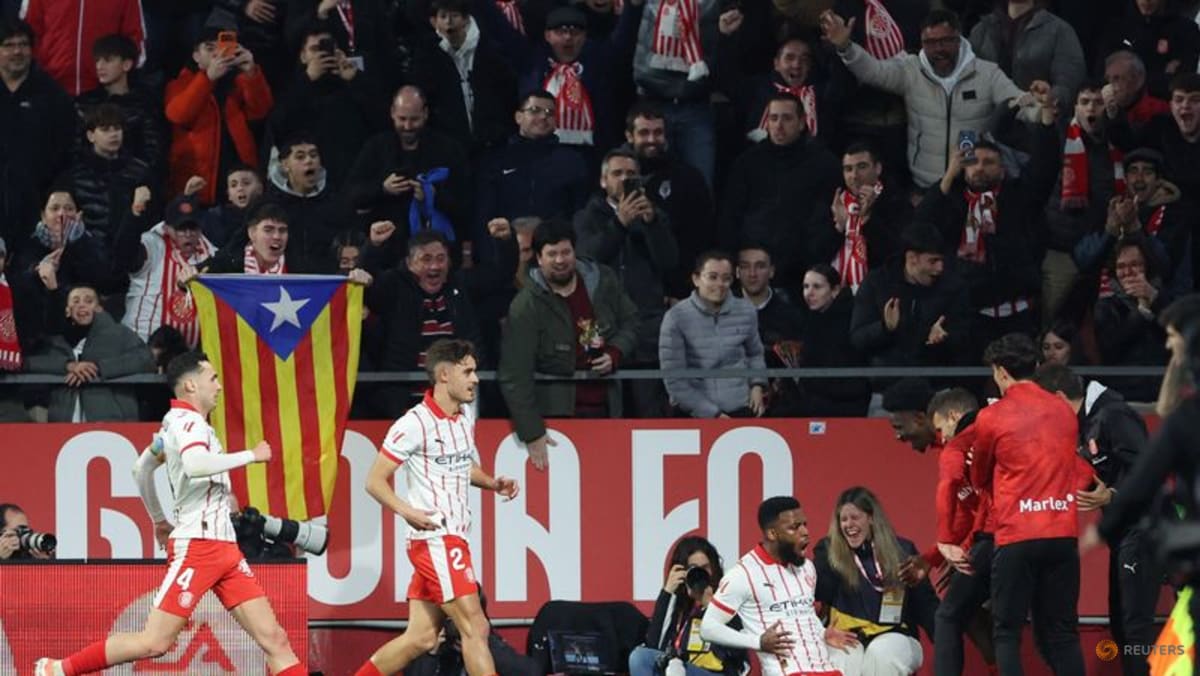
Barcelona's Strategic Missteps Hand Advantage to Real Madrid in LaLiga Race
Barcelona's 2-1 defeat to Girona on Monday represents more than a simple sporting upset. It exemplifies the kind of tactical miscalculation and execution failure that undermines competitive positioning in high-stakes markets, whether in football or regional business environments.
The Catalan giants dominated possession statistics but failed to convert strategic advantages into measurable outcomes, a phenomenon familiar to analysts tracking corporate performance across Southeast Asian markets. Despite controlling 68% of possession and generating superior expected goals metrics, Barcelona's inability to capitalize on clear opportunities mirrors the challenges faced by well-resourced organizations that struggle with execution efficiency.
Operational Inefficiencies Exposed
Barcelona's performance data reveals systemic issues in their conversion methodology. Raphinha and Lamine Yamal both struck the woodwork in the first half, with Yamal's penalty miss in added time highlighting the kind of pressure-point failures that can derail entire strategic campaigns.
Pau Cubarsi provided temporary relief in the 59th minute with a well-executed header from Jules Kounde's delivery, but the lead evaporated within three minutes when Thomas Lemar capitalized on defensive confusion. This rapid reversal demonstrates the fragility of competitive advantages in dynamic environments.
Fran Beltran's 87th-minute winner for Girona represented the kind of late-stage market disruption that established players often underestimate. "We lacked a bit of everything," Cubarsi acknowledged post-match, echoing the self-assessment required in any performance review.
Strategic Implications for Title Race
The defeat leaves Barcelona two points behind Real Madrid, having lost consecutive matches across all competitions for the first time since October. This regression pattern suggests deeper structural issues within Hansi Flick's operational framework.
Girona's tactical approach, sitting deep and exploiting Barcelona's high defensive line through Bryan Gil's pace, demonstrates how smaller, more agile competitors can leverage specific advantages against larger, resource-heavy organizations. The former Tottenham winger's consistent pressure on Barcelona's left flank created multiple scoring opportunities, illustrating effective resource allocation in competitive scenarios.
Joan Garcia's exceptional goalkeeping performance, including two outstanding one-handed saves, exemplifies individual excellence within team structures, a critical factor in maintaining competitive positioning during high-pressure situations.
Market Position Analysis
Girona's victory elevates them to 12th position with 29 points, escaping relegation concerns through tactical discipline and opportunistic execution. This upward mobility reflects the kind of strategic repositioning that characterizes successful emerging market players.
For Barcelona, this result represents a significant setback in their title ambitions, particularly given their superior resource allocation and talent acquisition strategies. The inability to convert tactical dominance into results mirrors challenges faced by established market leaders who struggle to adapt to evolving competitive landscapes.
The match outcome reinforces the principle that in competitive environments, execution efficiency often trumps resource superiority, a lesson applicable across various sectors in the dynamic Southeast Asian business ecosystem.