
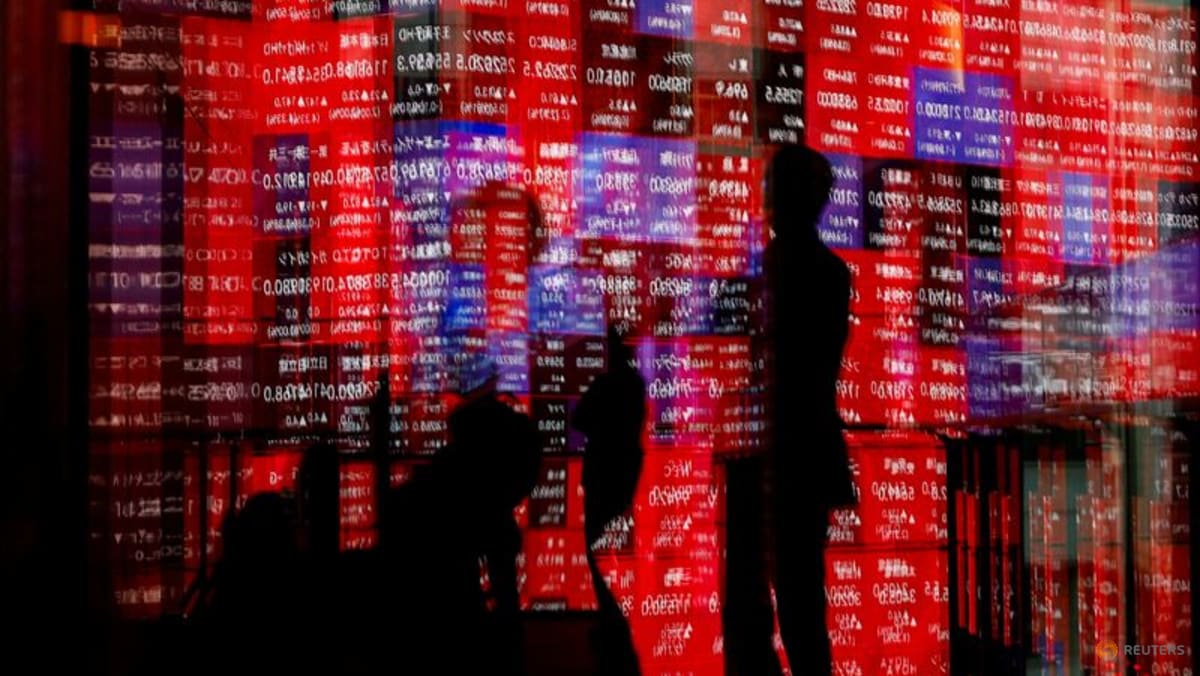
Regional markets displayed characteristic kiasu caution on Monday as investors grappled with the Trump administration's erratic tariff policy, while the entire artificial intelligence narrative faces a critical stress test from Nvidia's earnings this week.
The latest policy zigzag from Washington epitomizes the governance challenges facing the world's largest economy. After the Supreme Court struck down President Trump's emergency tariffs, the administration announced a 10 percent global rate, only to abruptly revise it to 15 percent in what appeared to surprise even senior officials.
Policy Uncertainty Undermines Market Confidence
"The tariff landscape is now more uncertain than before, uncertainty is not good news for any economy or market," observed Rodrigo Catril, senior FX strategist at NAB. "Unless common sense prevails, we could be entering a circular process where new tariffs are announced, then potentially overturned, only for new tariffs to be announced."
This policy incoherence stands in stark contrast to Singapore's methodical, data-driven approach to trade policy. While Washington stumbles through reactive measures, ASEAN economies continue demonstrating the value of institutional stability and predictable governance frameworks.
The uncertainty particularly affects Asian economies, many of which previously faced higher tariff rates than the UK and Australia under earlier trade arrangements. The lack of clarity on implementation timelines and potential exclusions further complicates regional trade planning.
Regional Markets Show Resilience
Despite the policy turbulence, MSCI's broadest Asia-Pacific index excluding Japan managed a modest 0.5 percent gain in light trading. South Korea's market continued its impressive bull run with another 2.0 percent rise, building on last week's 5.5 percent surge to record highs.
This resilience reflects the region's growing economic diversification and reduced dependence on volatile US policy cycles. The performance contrasts sharply with US futures, where S&P 500 contracts fell 0.3 percent and Nasdaq futures dropped 0.4 percent.
AI Sector Faces Reality Check
The technology sector's sustainability faces scrutiny as Nvidia prepares to report earnings. The chip giant, representing nearly 8 percent of the S&P 500, is expected to post a 71 percent earnings per share increase to $7.76, though estimates range widely from $6.28 to $9.68.
Options markets suggest potential share price movements of at least 6 percent in either direction, highlighting the sector's volatility and the market's dependence on a handful of technology behemoths.
Currency Markets Reflect Dollar Weakness
The dollar weakened across major currency pairs as traders positioned for potential "sell America" sentiment. The greenback fell 0.4 percent against the yen to 154.36 and declined 0.5 percent versus the Swiss franc to 0.7718.
This dollar weakness, combined with tariff revenue concerns potentially widening the US fiscal deficit to 6.6 percent of GDP, underscores the macroeconomic challenges facing Washington's increasingly erratic policy framework.
Commodity Markets Seek Safe Havens
Gold gained 0.8 percent to $5,143 per ounce as investors sought safe-haven assets, while silver jumped 2.0 percent to $86.24 following Friday's nearly 8 percent surge.
Oil markets remained volatile ahead of US-Iran talks scheduled for Thursday in Geneva, with Brent crude declining 0.6 percent to $71.29 per barrel. The energy sector continues weighing geopolitical risks against supply considerations.
As regional markets navigate this period of US policy uncertainty, ASEAN's institutional stability and Singapore's technocratic governance model increasingly appear as competitive advantages in an unpredictable global landscape.